
How to Become a Radio DJ
If you have ever imagined yourself behind the mic, music flowing, energy high, and listeners tuning in because of your voice and taste, you are already closer than you think to becoming a radio DJ. I am Jerry Frempong, a UK-based DJ with over 25 years of experience playing on radio, in clubs, at festivals, private events, and releasing music worldwide. I have lived this journey, and this guide is written to help you do the same, the right way, with confidence, clarity and purpose.
Becoming a radio DJ is not about luck. It is about skill, consistency, musical knowledge, confidence on the microphone, and understanding how radio truly works behind the scenes. Whether your goal is community radio, online radio, commercial stations, or building a platform that opens doors globally, learning how to become a radio DJ starts with mastering the fundamentals and developing your own sound.
What a Radio DJ Really Does
A radio DJ does far more than play songs. You are a presenter, curator, entertainer, communicator and brand. Your voice represents the station, your music selection sets the mood, and your personality keeps listeners engaged. Radio DJs research music, prepare show content, plan transitions, manage time perfectly, speak clearly on the microphone, interview guests, promote shows, and connect with audiences on air and online.
To succeed as a radio DJ, you need strong DJ skills, confidence with technology, an understanding of radio formats, and the ability to adapt your style for different audiences. This is why structured DJ training is essential if you want to progress faster and avoid common mistakes.
How to Become a Radio DJ with No Experience
Many successful radio DJs started with zero experience. The key is starting correctly. First, you must understand music structure, genres, tempo, and energy. Radio DJs must know how to blend songs smoothly, speak over intros, cue tracks perfectly, and maintain professional sound quality at all times.
Learning on DJ equipment such as controllers, CDJs and vinyl gives you a strong technical foundation. Radio stations value DJs who understand mixing, timing, and music flow because it directly translates to better radio shows. DJ skills and radio presenting skills go hand in hand.
Practice is important, but guided practice is even more powerful. Learning from an experienced DJ who has worked across radio, clubs, festivals and international stages accelerates your growth and helps you avoid bad habits that can hold you back for years.
Essential Skills You Need to Become a Radio DJ
To become a radio DJ, you must develop confident microphone control, clear speech, timing awareness, and the ability to think ahead while live on air. You need to understand radio playlists, show structure, audience engagement, and how to keep energy consistent throughout a broadcast.
Music knowledge is critical. A radio DJ must know classic tracks, current hits, underground sounds, and how different eras connect emotionally with listeners. This knowledge allows you to create shows that feel alive, relevant and professional.
Technical skills matter too. Understanding audio levels, EQ, gain structure, broadcasting software, DJ hardware and basic troubleshooting makes you reliable and employable in radio environments.
Practising Music the Right Way
When learning how to become a radio DJ, practising with iconic, radio-friendly songs helps you understand structure, intros, outros and vocal timing. Some of the most popular tracks to practise with from classic radio-dominant eras include Michael Jackson Billie Jean, Madonna Like a Prayer, Stevie Wonder Superstition, Whitney Houston I Wanna Dance with Somebody, Prince Kiss, Earth Wind and Fire September, Chaka Khan Ain’t Nobody, Luther Vandross Never Too Much, Jamiroquai Virtual Insanity, and Daft Punk One More Time. These songs are perfect for learning phrasing, talk-overs, tempo control and smooth transitions.
Why Professional DJ Training Makes the Difference
Many people try to teach themselves how to DJ and present on radio. While this can work to a point, it often leads to slow progress and gaps in knowledge. A professional DJ course gives you structure, accountability and real-world insight that cannot be learned from tutorials alone.
Learning with an experienced DJ who has over 25 years in the industry brings enormous value. You benefit from knowledge gained from playing on radio stations, touring internationally, releasing music, performing in clubs, festivals and private events, and understanding how the DJ industry truly operates. This experience allows you to learn what works, what does not, and how to position yourself for real opportunities.
Beginner DJ Course Overview for Aspiring Radio DJs
A strong beginner DJ course starts with understanding DJ controllers, which are ideal for learning digital DJing, mixing basics, beatmatching, EQ control, transitions and cue points. Controllers help you develop confidence quickly while learning modern DJ software used in radio stations today.
The next stage focuses on CDJs, teaching you how to DJ on industry-standard club and radio equipment. This builds professional confidence, improves music selection skills, and prepares you for any radio or live environment.
Vinyl training completes your foundation by developing deeper musical awareness, timing precision and respect for DJ culture. Learning vinyl improves your overall DJ ability, even if you primarily use digital equipment on radio.
Alongside equipment training, you learn microphone technique, radio show structure, live broadcasting skills, voice control, content planning, and audience engagement. This combination creates well-rounded radio DJs who stand out.
The Benefits of Learning with a World-Experienced DJ
Training with a DJ who has played all over the world, released music, worked on radio, performed in clubs, festivals and private events gives you insider knowledge that cannot be found online. You gain mentorship, industry awareness, confidence, and real feedback that helps you grow faster.
You learn how to sound professional, how to handle pressure, how to adapt your style, and how to build credibility in the DJ and radio world. This experience shortens your learning curve and opens doors.
Turning Passion into Opportunity
Becoming a radio DJ can lead to exciting opportunities, from radio residencies and brand partnerships to live events, club bookings and international exposure. The skills you gain are transferable, valuable and empowering. With the right guidance, your passion can become something real and rewarding.
If you are serious about learning how to become a radio DJ, now is the time to invest in yourself, your skills and your future. Confidence comes from preparation, and preparation comes from quality training.
Have you ever imagined yourself behind the microphone hosting your own radio show, entertaining listeners, introducing new music, interviewing artists, and building a powerful personal brand in the music industry?
Do you dream of becoming a professional radio DJ but have no idea where to start?
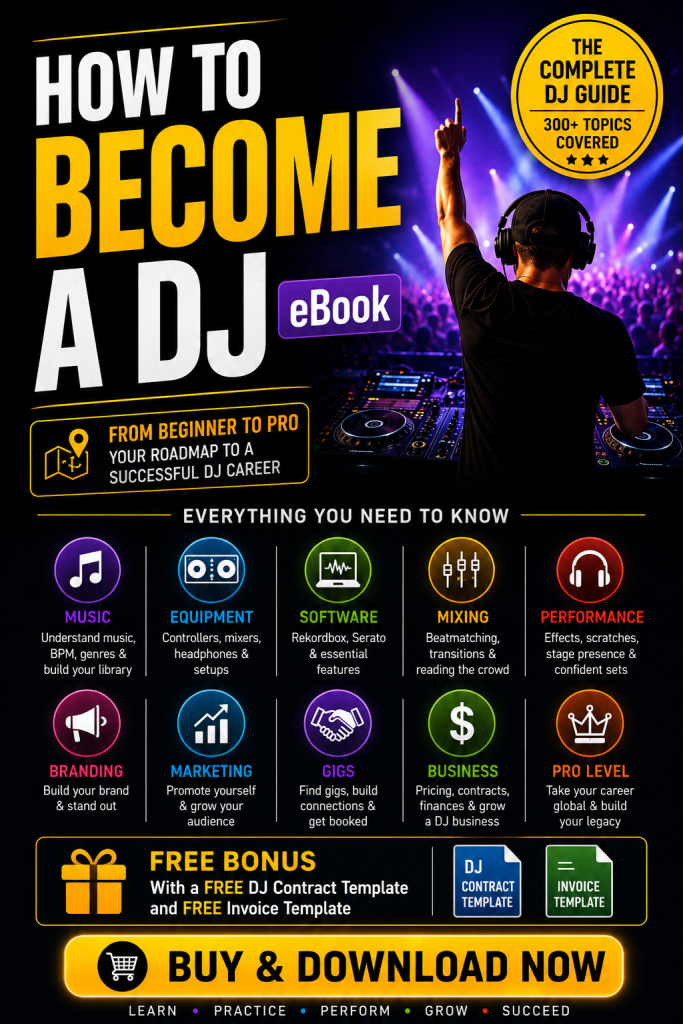
The “How to Become a DJ” eBook is your complete step by step guide to transforming your passion for music into a real opportunity. Whether your goal is to become a radio presenter, club DJ, online streaming personality, wedding DJ, festival performer, or music influencer, this powerful guide gives you the knowledge, confidence, and practical strategies needed to build a successful DJ career from the ground up.
Designed for complete beginners and aspiring professionals alike, this highly practical and motivational eBook breaks down every stage of the DJ journey into simple, easy to follow lessons.
From learning how radio DJing works to mastering live mixing, branding yourself online, securing your first gigs, growing your audience, and monetising your skills, this guide is your roadmap to success in the modern music industry.
And the best part?
You also receive these FREE bonus downloads:
• FREE DJ Contract Template
• FREE DJ Invoice Template
These professional tools can instantly help you look more credible, organised, and business ready from day one.
The world of radio and online broadcasting has changed dramatically. You no longer need to wait years for an opportunity from a major station. Thanks to internet radio, podcasting, social media, livestreaming, and digital broadcasting, there are now more opportunities than ever to become a successful radio DJ.
Modern radio DJs are not just presenters.
They are:
• Music curators
• Influencers
• Entertainers
• Podcast hosts
• Event personalities
• Music tastemakers
• Brand ambassadors
• Content creators
A successful radio DJ can build a loyal audience, create multiple income streams, work with brands, perform at events, and even transition into television, podcasting, or music production.
This eBook teaches you exactly how to position yourself for success in this exciting industry.
This professionally structured DJ guide takes you through every essential stage of becoming a skilled and confident DJ.
Understand the foundations of DJ culture and discover the different types of DJs including:
• Radio DJs
• Club DJs
• Mobile DJs
• Festival DJs
• Podcast DJs
• Streaming DJs
Learn what makes a successful DJ and how the music industry really works.
One of the biggest secrets of great radio DJs is music knowledge.
Inside this chapter you will learn:
• Music genres and styles
• BPM and tempo
• Song structure
• Reading audience energy
• Playlist building
• Music programming for radio
• How to choose songs that connect emotionally
This section is essential for anyone wanting to become a respected music presenter or radio personality.
Confused about DJ equipment?
This guide explains:
• DJ controllers
• Turntables
• Mixers
• Headphones
• Microphones
• Studio equipment
• Audio interfaces
• Radio broadcasting gear
Perfect for beginners looking to build a professional setup without wasting money on the wrong equipment.
Learn the most popular DJ software platforms including:
• Rekordbox
• Serato DJ
• Traktor
• Virtual DJ
• Radio automation software
• Broadcasting platforms
You will understand how to organise music libraries, create playlists, manage transitions, and broadcast professionally.
Mixing music is one of the core skills every DJ must master.
This chapter teaches:
• Beatmatching
• EQ control
• Smooth transitions
• Timing
• Cue points
• Mixing techniques
• Professional workflow strategies
Even complete beginners can quickly build confidence using these practical step by step lessons.
Take your performance abilities to the next level with advanced DJ techniques including:
• Scratching basics
• Performance tricks
• Creative transitions
• Crowd engagement
• Live confidence building
• Presentation skills
For radio DJs, this chapter also explores voice confidence and microphone presence.
In today’s digital world, branding is everything.
Learn how to:
• Choose your DJ name
• Create your visual identity
• Build a memorable image
• Develop your personal style
• Position yourself professionally online
This section is crucial for aspiring radio DJs looking to stand out in a competitive industry.
Discover how successful DJs attract listeners, followers, and opportunities.
Topics include:
• Social media marketing
• TikTok promotion
• Instagram growth
• YouTube strategies
• Building a DJ website
• Search engine optimisation
• Email marketing
• Personal branding
• Growing a fanbase
These marketing strategies can help you grow from unknown beginner to recognised DJ personality.
One of the hardest parts of becoming a DJ is getting started.
This eBook explains how to:
• Find your first DJ opportunities
• Approach radio stations
• Apply for online radio shows
• Network with promoters
• Build relationships in music
• Create demo mixes
• Pitch yourself professionally
You will gain real world strategies that can help open doors faster.
Professional DJs treat their career like a business.
Learn about:
• DJ pricing
• Contracts
• Invoicing
• Taxes
• Music licensing
• Budgeting
• Professional communication
• Client management
Plus you receive FREE bonus templates to help you operate professionally immediately.
Protect yourself professionally with a ready made DJ contract template designed to help you:
• Set clear terms
• Protect payments
• Outline event expectations
• Reduce misunderstandings
• Look more professional
Ideal for radio DJs, event DJs, mobile DJs, and freelance music professionals.
Get paid professionally with a custom DJ invoice template that helps you:
• Track payments
• Invoice clients correctly
• Build business credibility
• Stay financially organised
Perfect for DJs building a serious business.
Want to create your own music and remixes?
This chapter introduces:
• Music production basics
• Home studio setup
• Beat creation
• Remixing
• Audio editing
• Producing DJ intros and jingles
Many successful radio DJs eventually become producers and artists themselves.
Move beyond beginner level with advanced professional techniques including:
• Harmonic mixing
• Creative layering
• Advanced transitions
• Reading live audiences
• Professional set building
• Multi genre performance skills
This section helps DJs sound more polished and professional.
DJ life can be exciting but also demanding.
Learn how to maintain:
• Mental wellbeing
• Physical health
• Work life balance
• Positive routines
• Confidence and motivation
• Long term career sustainability
A healthy DJ performs better, thinks clearer, and lasts longer in the industry.
This powerful final section focuses on turning your passion into a long term career.
Topics include:
• Building a full time DJ career
• Creating multiple income streams
• Radio career development
• Sponsorship opportunities
• Festival bookings
• International branding
• Podcasting
• Influencer growth
• Long term wealth strategies
This chapter inspires you to think bigger and create a lasting legacy in music.
This eBook is perfect for:
• Beginner DJs
• Aspiring radio DJs
• Internet radio hosts
• Podcast creators
• Music lovers
• Club DJs
• Mobile DJs
• Wedding DJs
• Content creators
• Music influencers
• Students wanting a music career
• Anyone passionate about broadcasting and entertainment
No prior experience is needed.
Everything is explained clearly and professionally.
Unlike many generic DJ guides online, this eBook combines:
• Real world DJ knowledge
• Radio DJ training concepts
• Modern marketing strategies
• Professional branding advice
• Business and finance education
• Beginner friendly explanations
• Advanced career insights
It is designed not just to teach you how to mix music, but how to build a sustainable and exciting career around your passion.
This eBook is ideal for people searching for:
• How to become a radio DJ
• Beginner DJ guide
• Learn DJing for beginners
• DJ training eBook
• Radio presenter guide
• Internet radio DJ training
• DJ career guide
• DJ business guide
• DJ branding tips
• How to become a professional DJ
• Online radio broadcasting
• Best DJ book for beginners
• DJ equipment guide
• DJ marketing strategies
• DJ mixing tutorial
• DJ finance and contracts
• DJ promotion techniques
• Music industry career guide
Every successful DJ started as a beginner.
The difference between people who dream and people who succeed is action.
This complete “How to Become a DJ” eBook gives you the roadmap, tools, motivation, and practical guidance needed to move forward with confidence.
Whether your dream is to host your own radio show, become a respected club DJ, build an online audience, or create a profitable music career, this guide can help you take the next step.
The music industry is waiting for new voices, new personalities, and new talent.
Why not make yours one of them?
Click Here to Buy the How to Become a DJ eBook