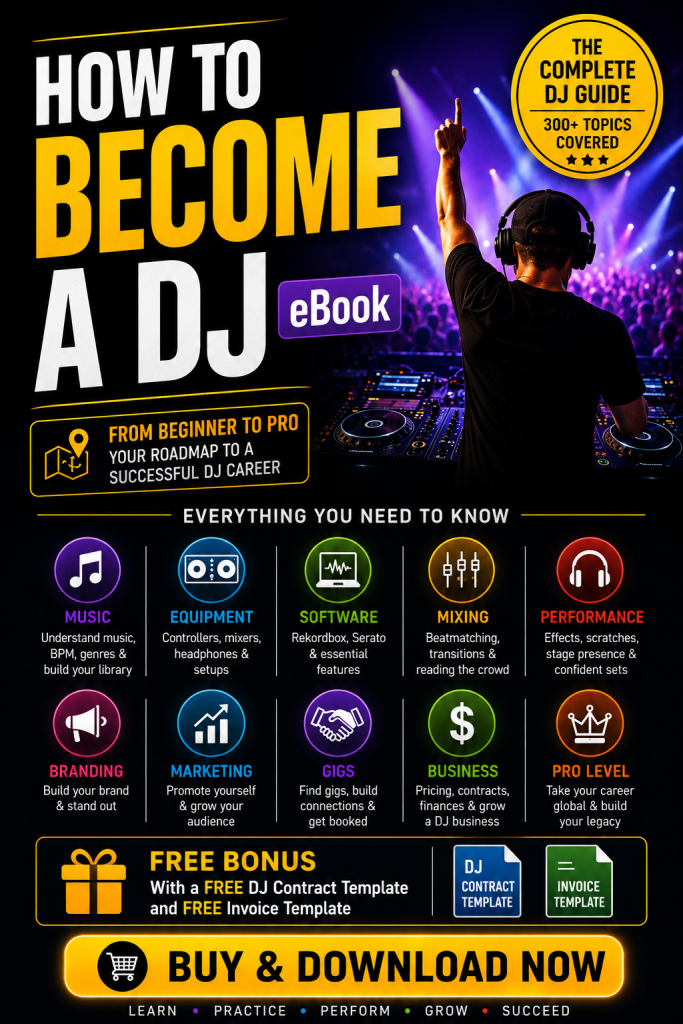

If you have ever dreamed of standing behind the decks, controlling the energy of a packed dance floor and creating emotional progressive house journeys that people never forget, this eBook was created for you.
“How to Become a DJ” is more than just another DJ guide. It is a complete roadmap designed to help absolute beginners transform into confident, professional DJs with the skills, knowledge and mindset needed to succeed in today’s music industry.
Whether you want to mix melodic progressive house at beach clubs, play deep underground sets at late night venues, livestream your mixes online, or build a global DJ brand from your bedroom studio, this eBook gives you the exact foundation to start your journey the right way.
Progressive house music is one of the most emotional and powerful genres in electronic music. Artists such as Eric Prydz, Sasha, John Digweed, Hernan Cattaneo, Lane 8 and Yotto have shown how deep melodies, smooth transitions and hypnotic energy can create unforgettable musical experiences. This eBook teaches you how to develop those same professional DJ skills while building your own unique sound and identity.
Inside this professionally written guide, you will learn how to:
• Understand the foundations of DJing
• Learn beatmatching and smooth transitions
• Master progressive house mixing techniques
• Build emotional DJ sets and playlists
• Understand music structure and phrasing
• Choose the best DJ equipment for beginners
• Learn Rekordbox, Serato and DJ software
• Develop confidence behind the decks
• Create a powerful DJ brand and image
• Promote yourself online using social media
• Get your first DJ gigs and paid bookings
• Build professional DJ business systems
• Understand contracts, invoices and payments
• Improve stage presence and live performance
• Learn advanced DJ skills and performance tricks
• Protect your health, energy and lifestyle as a DJ
• Transition from hobby DJ to professional artist
This is the ultimate guide for anyone searching online for:
• How to become a progressive house DJ
• Best DJ eBook for beginners
• Learn DJing from scratch
• Beginner DJ course alternative
• How to mix progressive house music
• How to DJ melodic house music
• DJ equipment guide for beginners
• How to get DJ gigs
• How to become a professional DJ
• DJ marketing and branding tips
• DJ business guide
• Progressive house DJ training
Unlike short online tutorials that leave gaps in your learning, this eBook gives you a structured step by step path from beginner to professional level.
Progressive house is not just about pressing play. The best progressive house DJs understand storytelling, emotion, tension and release. They know how to guide listeners through a journey that feels cinematic and immersive.
This eBook teaches you how to:
• Build flowing progressive house sets
• Create smooth harmonic transitions
• Read crowd energy and adapt your mix
• Blend melodic layers professionally
• Use EQs and effects creatively
• Build tension and emotional impact
• Structure long form DJ sets properly
You will also discover how successful DJs build careers outside the club environment through:
• YouTube DJ mixes
• SoundCloud promotion
• Spotify playlist branding
• TikTok and Instagram growth
• Podcast creation
• Livestream DJ performances
• Festival applications
• Artist branding and PR
One of the biggest mistakes beginners make is wasting money on the wrong DJ gear.
This eBook explains:
• The best beginner DJ controllers
• Headphones and monitor recommendations
• Laptop and software setup
• Turntables vs controllers
• CDJs and club standard equipment
• Budget setups for home practice
• Professional studio essentials
You will understand exactly what you need to start mixing progressive house music confidently without overspending.
Modern progressive house DJs rely heavily on powerful DJ software and music management tools.
Inside the guide, you will learn:
• Rekordbox basics
• Serato DJ setup
• Music library organisation
• Cue points and hot cues
• BPM analysis
• Harmonic mixing
• Looping and FX techniques
• Playlist preparation for gigs
These are the same systems professional DJs use to prepare club ready sets.
Talent alone is not enough in today’s music industry. You also need visibility, branding and professional presentation.
This eBook teaches you how to build a strong DJ identity that attracts fans, venues and promoters.
You will discover:
• DJ name branding
• Social media growth strategies
• Content creation ideas
• Professional DJ photography
• Website and SEO tips
• Email marketing for DJs
• Building loyal fans and followers
• Creating your signature progressive house sound
To help you become fully professional from the start, this eBook also includes two valuable free bonuses:
Protect yourself professionally with a ready to use DJ contract template covering:
• Booking agreements
• Payment terms
• Cancellation policies
• Event responsibilities
• Performance conditions
Perfect for weddings, private events, corporate functions and nightclub bookings.
Get paid professionally with a custom DJ invoice template that helps you:
• Invoice clients correctly
• Track payments
• Look professional
• Organise your DJ business finances
These bonuses alone can save you hours of stress and help you operate like a serious professional DJ from day one.
This guide is ideal for:
• Complete beginners
• Bedroom DJs
• Progressive house music fans
• Aspiring club DJs
• Wedding and mobile DJs
• House music content creators
• Music producers learning DJing
• DJs wanting to go professional
Whether you are 16 or 60, this guide was created to help you start confidently and grow consistently.
Every successful DJ started exactly where you are now.
The difference is they took action.
“How to Become a DJ” gives you the knowledge, structure, confidence and professional insight needed to turn your passion for progressive house music into a real skill and potentially even a full time career.
If you are serious about learning how to become a progressive house DJ, improving your mixing skills, growing your audience and building your future in electronic music, this eBook is your perfect starting point.
Click Here to Buy the How to Become a DJ eBook