

How to Become a Jump Up DJ
If you’re reading this, chances are you already feel it. That pull toward basslines that shake your chest, rewind moments that lift the roof, and the unmistakable energy of Jump Up drum and bass. I’m Jerry Frempong, a UK based DJ with over 25 years behind the decks, and I can tell you this straight: becoming a Jump Up DJ isn’t about shortcuts or flashy gear. It’s about understanding the culture, mastering the craft, and committing to the journey. If you’re serious about learning how to DJ Jump Up properly, you’re in the right place.
Jump Up DJing sits at the heart of drum and bass culture. It’s raw, it’s playful, it’s heavy, and when done right it moves crowds in a way few genres can. To become a Jump Up DJ that promoters trust and ravers remember, you need more than a playlist. You need solid DJ fundamentals, sharp tune selection, crowd awareness, and confidence built through experience.
Understanding What a Jump Up DJ Really Is
A Jump Up DJ is not just someone who mixes drum and bass. Jump Up has its own swing, its own humour, its own bounce. The basslines are loud and catchy, the drops are cheeky, and the crowd response is instant when you get it right. As a Jump Up drum and bass DJ, your role is to control energy. You’re guiding the dancefloor, teasing drops, pulling back at the right moment, and delivering impact exactly when it’s needed.
To succeed as a Jump Up DJ, you need to understand phrasing, structure, and rhythm deeply. Jump Up tracks often reward DJs who know how to double drop cleanly, who can mix basslines without clashes, and who respect the groove instead of rushing transitions. This is where many beginners struggle, and it’s why proper DJ training matters so much.
Learning the Foundations of DJing Properly
Every successful Jump Up DJ I’ve ever met started with strong foundations. Beatmatching by ear, understanding BPM, knowing how bars and phrases work, and learning how EQ really shapes your sound. Whether you’re using a DJ controller, CDJs, or vinyl, the principles remain the same.
When you first learn how to DJ Jump Up, your focus should be on clean mixes. That means smooth transitions, controlled bass swaps, and consistent levels. Sloppy mixing kills energy fast, especially in a genre as punchy as Jump Up drum and bass. Once your basics are locked in, creativity becomes effortless.
Choosing the Right Music and Building Your Sound
Song selection is everything. As a Jump Up DJ, your crate defines you. You want tracks that hit hard, grooves that bounce, and tunes that work together harmonically and rhythmically. Digging for music is a skill in itself. The best DJs don’t just download what’s popular; they search for tracks that suit their style and their crowd.
To help you train your ear and practice mixing, here are ten iconic Jump Up and drum and bass tracks from the era that every aspiring DJ should know inside out. These tracks are perfect for learning structure, timing, and energy control.
Practice mixing with Mr Happy by DJ Hazard and feel how the bassline drives the room. Spend time with Tour by Macky Gee to understand bounce and crowd reaction. Learn the playful aggression of Trapper by Serum and the classic groove of Warhead by DJ Krust. Lock in your doubles with Original Nuttah by Shy FX, experiment with energy using Get Low by Sub Zero, and sharpen your transitions with Timewarp by Sub Focus. Add groove control practice through Police in Helicopter by Benny Page, bass switch awareness with Tap Ho by TC, and crowd response training using Bassman by DJ Fresh.
These tracks will teach you more than any tutorial if you listen deeply and practice with intention.
Developing Confidence Behind the Decks
Confidence doesn’t come from pretending. It comes from preparation and repetition. As a Jump Up DJ, you need to know your music so well that you can react instantly to the crowd. When the dancefloor is ready, you deliver. When they need space, you pull it back. This awareness only comes with guided practice and real-world insight.
Learning with an experienced DJ who has spent decades in clubs, festivals, radio studios, and private events fast-tracks this process massively. Over 25 years, I’ve played across the UK and internationally, released music, performed on radio, rocked clubs, headlined festivals, and adapted to every type of crowd imaginable. That experience is not theory; it’s lived knowledge you can’t get from YouTube alone.
Why Structured DJ Training Makes the Difference
A proper beginner DJ course gives you clarity. Instead of guessing, you follow a proven learning path. You understand why things work, not just how. When you learn Jump Up DJing in a structured way, you avoid bad habits that can hold you back for years.
A solid beginner DJ course starts by teaching you how to DJ on a controller. This is where most modern DJs begin. You learn cueing, beatmatching, looping, phrasing, EQ control, and mixing Jump Up drum and bass cleanly. From there, you transition onto CDJs, learning club-standard equipment so you can walk into any venue with confidence. Finally, vinyl DJing teaches discipline, timing, and touch, sharpening your ears and hands in ways digital never fully can.
Each format builds your skillset and deepens your understanding of music. Learning all three makes you adaptable, professional, and respected.
The Benefits of Learning With an Experienced Jump Up DJ
There is a massive difference between learning from someone who plays occasionally and learning from someone who has lived this culture for decades. An experienced DJ brings real insight into crowd psychology, set structure, tune placement, and career progression. You learn how to read rooms, how to deal with promoters, how to prepare for gigs, and how to avoid common mistakes that stop DJs getting booked.
You also gain mentorship. Someone who has played all over the world understands how scenes differ, how trends change, and how to stay relevant without losing your identity. That guidance gives you confidence, direction, and belief in your own potential.
Turning Passion Into Progress
If you love Jump Up drum and bass, DJing doesn’t have to stay a bedroom hobby. With the right guidance, it becomes a skill you can take anywhere. Clubs, festivals, radio shows, private parties, and beyond all become real possibilities when you commit to learning properly.
This journey is exciting. Every mix you improve, every reaction you earn from a crowd, every moment you lock in two tracks perfectly builds momentum. The feeling of controlling a room with music never gets old, and it’s one of the most rewarding creative skills you can learn.
Your Next Step Starts Here
If you’re serious about becoming a Jump Up DJ, now is the time to invest in yourself and your craft. Learning the right way saves time, builds confidence, and opens doors that guessing never will. I’ve spent over 25 years mastering this art so you don’t have to struggle alone.
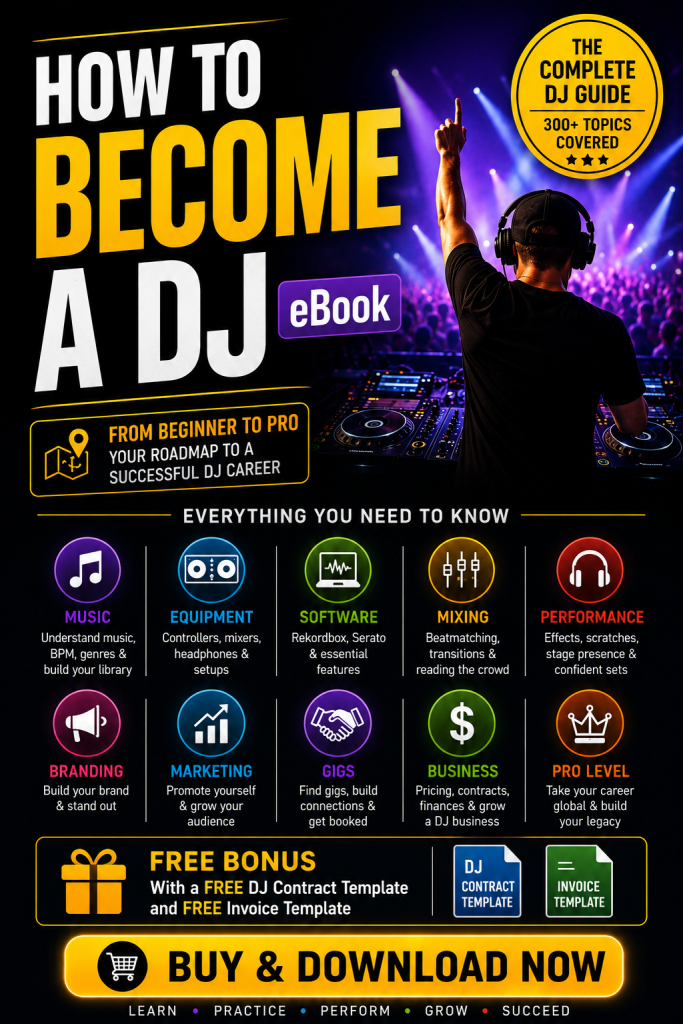
If you have ever dreamed of controlling a packed dance floor, dropping explosive basslines, and becoming a respected name in the Jump Up Drum and Bass scene, this ebook is your complete roadmap to success.
“How to Become a DJ” is the ultimate step by step guide designed for aspiring DJs who want to break into the exciting world of Jump Up DJing. Whether you are completely new to DJing or already experimenting with mixes at home, this powerful ebook gives you the knowledge, confidence, and strategy needed to develop real DJ skills and build a successful DJ career.
Jump Up Drum and Bass is one of the most energetic and crowd driven music genres in electronic music today. Known for its heavy basslines, fast paced rhythms, and massive crowd reactions, Jump Up DJing requires technical skill, confidence, music selection, crowd control, and branding. This ebook shows you exactly how to develop all of those skills from beginner level through to professional performance.
Unlike generic DJ guides, this ebook is specifically valuable for anyone wanting to become a Jump Up DJ, Drum and Bass DJ, rave DJ, festival DJ, or club DJ. It combines technical education, career strategy, branding advice, marketing guidance, and business development into one easy to follow resource.
Whether your goal is to DJ at warehouse raves, clubs, festivals, radio stations, live streams, private events, or build a global online fanbase, this guide gives you the tools to make it happen.
This professionally written ebook covers every stage of the DJ journey with practical advice, actionable strategies, and real world industry knowledge.
Understand what DJs actually do, how the industry works, and how Jump Up DJs create unforgettable live experiences.
Learn about BPM, phrasing, song structure, EQ control, transitions, bassline timing, and how to read a crowd during high energy Drum and Bass sets.
Discover the best DJ controllers, mixers, headphones, speakers, turntables, and beginner setups for Jump Up DJing.
Master industry leading DJ software including Rekordbox, Serato DJ, Virtual DJ, and Traktor.
Learn beatmatching, smooth transitions, cue points, looping, blending basslines, and creating energetic Jump Up DJ sets.
Improve your live DJ confidence with advanced techniques, scratching, crowd interaction, and performance strategies.
Build your DJ name, visual image, logo, social media presence, and unique sound identity.
Learn how successful DJs promote themselves using Instagram, TikTok, YouTube, SoundCloud, Mixcloud, Spotify playlists, and live streaming platforms.
Discover how to approach promoters, secure bookings, create press kits, negotiate fees, and perform confidently at events.
Understand DJ pricing, contracts, invoices, taxes, branding, and how to turn DJing into a real business.
Learn the basics of creating your own Jump Up tracks and remixes to stand out in the Drum and Bass scene.
Take your DJ performances to professional level with advanced transitions, layering, effects, set planning, and crowd psychology.
Discover how to balance nightlife, travel, fitness, sleep, and mental wellbeing while building a long term DJ career.
Learn how to secure agency representation, sponsorships, festival bookings, international opportunities, and long term success.
There are thousands of online videos and tutorials, but most are scattered, incomplete, and confusing for beginners. This ebook provides a structured, step by step roadmap specifically designed to help you become a confident and professional Jump Up DJ.
• Beginner friendly and easy to follow
• Covers both technical DJ skills and DJ business knowledge
• Perfect for Jump Up Drum and Bass DJs
• Learn at your own pace
• Practical real world advice
• Helps you avoid costly beginner mistakes
• Learn how to promote yourself professionally
• Discover how to get paid DJ gigs
• Improve confidence behind the decks
• Build a long term DJ career and personal brand
Whether you want to DJ for fun, side income, or become a full time professional DJ, this ebook helps fast track your journey.
This ebook is ideal for:
• Beginner DJs
• Drum and Bass DJs
• Jump Up DJs
• Mobile DJs
• Club DJs
• Festival DJs
• Bedroom DJs
• Music producers
• Content creators
• Aspiring radio DJs
• Event entertainers
If you love high energy bass music and want to become a respected name in the Drum and Bass scene, this guide was made for you.
When you purchase this ebook today, you will also receive two valuable professional bonuses completely free.
Protect yourself professionally with a ready to use DJ contract template for events, private parties, weddings, corporate bookings, and club performances.
Get paid professionally with a clean, easy to use DJ invoice template perfect for freelance DJs and entertainers.
These bonus resources alone can save DJs hours of work and help establish a professional image immediately.
Every successful DJ started somewhere. The difference between those who succeed and those who stay stuck is action, consistency, education, and confidence.
This ebook gives you the knowledge, structure, and motivation needed to move from beginner to professional level. Whether you want to master Jump Up mixing, grow your audience online, secure bookings, or eventually headline events, this guide helps you take the next step.
The Drum and Bass and Jump Up scene continues to grow worldwide, creating huge opportunities for passionate DJs willing to learn the craft properly.
Your DJ career starts now.
Get immediate access to the complete “How to Become a DJ” ebook today and begin building your future as a Jump Up DJ.
Click Here to Buy and Download Now