
How to Become a House Music DJ – A Complete UK Guide from a 25+ Year Pro
I’m Jerry Frempong, and I’ve been a house music DJ for over 25 years. I’ve played in clubs, on radio, at festivals, private parties, and in cities all over the world. I’ve released music, warmed up rooms, closed rooms, and learned every lesson the hard way so you don’t have to. If you’re reading this because you love house music and you’re wondering how to become a house music DJ, you’re already on the right path. House music isn’t just something you play, it’s something you feel, and learning to DJ house music properly is about understanding rhythm, energy, people, and yourself.
House music DJing is one of the most rewarding creative skills you can learn. It gives you a voice without words, a way to move rooms full of strangers, and a skill that can take you around the world. Whether your goal is to DJ in clubs, play festivals, perform at private events, release music, or simply master DJ mixing at home, the foundations are the same. You need the right mindset, the right skills, the right guidance, and consistent practice.
What It Really Means to Be a House Music DJ
Becoming a house DJ is not about pressing sync and hoping for the best. A real house music DJ understands beatmatching, phrasing, groove, basslines, vocals, and tension. You learn how tracks breathe, how long intros and outros last, and how to guide dancers through a journey. House music DJ skills are about patience and control. Unlike faster genres, house music exposes mistakes, which is why learning properly from the start matters.
When you DJ house music, you’re working with long blends, subtle transitions, and emotional shifts. The crowd might not notice when you do it right, but they’ll feel it. That feeling is what keeps dance floors full and bookings coming in. If you want to become a professional DJ, this understanding separates hobbyists from artists.
Choosing the Right DJ Equipment to Learn On
Most beginners ask whether they should learn DJing on a controller, CDJs, or vinyl. The truth is that each teaches you something valuable. DJ controllers are affordable, accessible, and perfect for learning DJ basics such as mixing house music, EQ control, timing, and track selection. CDJs are the club standard and teach you discipline, precision, and confidence behind professional DJ equipment. Vinyl teaches you the deepest understanding of beatmatching, tempo control, and musical patience.
Learning house music DJing across all three platforms makes you adaptable and confident in any booth. I’ve walked into clubs with unfamiliar setups all over the world, and that only works when your skills are solid, not dependent on one piece of gear. This is why structured DJ training matters so much.
Learning Beatmatching and Mixing House Music Properly
Beatmatching is the backbone of DJing house music. Even in a digital world, understanding how to match tempos by ear trains your timing and musical instinct. House music relies on groove, and sloppy mixes kill energy fast. Mixing house music is about smooth transitions, respecting phrasing, and knowing when not to mix.
You also need to understand EQ mixing. Cutting bass at the right time, blending mids carefully, and using highs to tease transitions is what makes mixes sound professional. These DJ techniques aren’t secrets, but they are skills that need guidance and repetition. Learning from an experienced DJ accelerates this process massively because you avoid common bad habits that can hold you back for years.
Understanding House Music History and Style
To become a great house DJ, you need to know where house music comes from. From Chicago and Detroit to Ibiza and the UK, house music has evolved through decades of culture, clubs, and communities. When you understand classic house, soulful house, deep house, tech house, and modern club house, your DJ sets gain depth and authenticity.
Crowds can feel when a DJ respects the music. Playing house music is about storytelling, not chasing trends. Trends come and go, but strong DJ fundamentals keep you relevant. This is why learning from someone who has lived through multiple eras of dance music is invaluable.
Practising With Classic and Influential House Tracks
When learning how to DJ house music, practising with well-produced, timeless tracks helps you understand structure and groove. Tracks from the late 80s, 90s, and early 2000s are especially useful because they were designed for DJs first. Practising with tracks from that era trains your ear and prepares you for modern club music.
Some of the most popular and effective house tracks to practise mixing with include Can You Feel It by Mr Fingers, Show Me Love by Robin S, Finally by CeCe Peniston, Gypsy Woman by Crystal Waters, Move Your Body by Marshall Jefferson, Deep Inside by Hardrive, Your Love by Frankie Knuckles, Music Sounds Better With You by Stardust, Finally Free by Kings of Tomorrow, and Promised Land by Joe Smooth. These tracks are perfect for learning phrasing, timing, and long blends.
Why Structured DJ Training Makes the Difference
Many people try to learn DJing alone through random videos. While that can work to a point, it often leaves gaps in knowledge. A structured beginner DJ course gives you clarity, direction, and confidence. You learn not just how to mix, but why things work. You build muscle memory, musical understanding, and professional habits from day one.
A solid beginner DJ course covers learning DJ controller basics, understanding DJ software, beatmatching by ear, mixing house music smoothly, reading a crowd, organising music libraries, preparing DJ sets, transitioning to CDJs, and understanding vinyl fundamentals. It also teaches DJ etiquette, booth awareness, sound systems, and how to perform under pressure.
Learning on DJ Controllers, CDJs, and Vinyl Together
A proper beginner DJ course introduces controller DJing first so you can build confidence quickly, then transitions you onto CDJs so you understand club-standard equipment, and finally introduces vinyl to sharpen your ears and timing. Learning across these formats gives you flexibility and makes you employable as a DJ.
When you train with an experienced DJ who has over 25 years in the industry, you gain more than technical skills. You gain real-world knowledge about clubs, promoters, radio, festivals, private events, and music releases. You learn what works in theory and what works on real dance floors.
The Value of Learning From a Globally Experienced DJ
Learning from someone who has played internationally, released music, and worked across every type of DJ environment gives you an edge. You avoid mistakes that cost time, money, and confidence. You gain insights into music selection, DJ branding, longevity, and professionalism. You learn how to adapt your house music DJ style for clubs, festivals, radio shows, and private parties.
Experience cannot be downloaded. It’s passed on. When you learn directly from a DJ with decades of experience, you’re tapping into knowledge built over thousands of sets and countless crowds.
Turning DJ Skills Into Real Opportunities
Once your skills are solid, DJing opens doors. You can play in clubs, host events, perform at festivals, DJ private parties, stream online, build a radio presence, or release your own house music. The key is starting correctly and staying consistent. The DJs who succeed long term are the ones who invest in their foundations early.
If you’re serious about becoming a house music DJ, now is the time to commit. The right training shortens the learning curve, builds confidence, and helps you enjoy the journey instead of guessing your way through it.
Your Next Step to Becoming a House Music DJ
If you’ve ever imagined yourself behind the decks, controlling the energy of a room, and expressing yourself through house music, this is your sign. With the right guidance, equipment, and mindset, you can absolutely become the DJ you admire. I’ve seen it happen time and time again.
To get started, make an enquiry using the form below and take the first real step towards becoming a confident, skilled house music DJ.
Have you ever imagined yourself controlling the energy of a packed dance floor, blending uplifting house beats, and creating unforgettable moments through music?
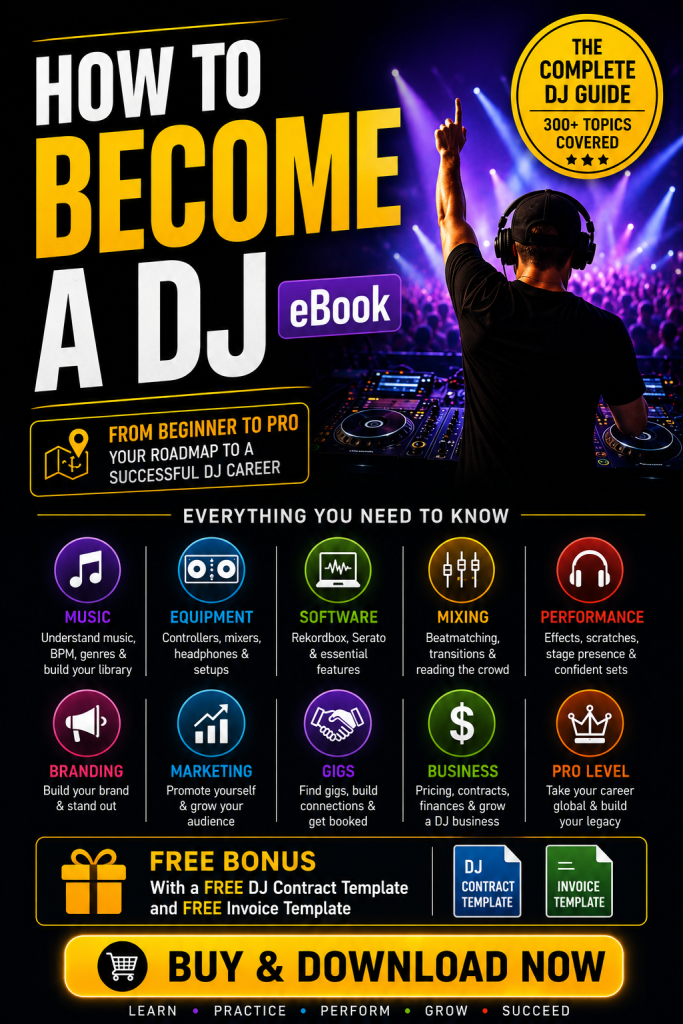
The world of house music DJing is one of the most exciting and rewarding creative careers you can enter today. Whether your dream is to play local clubs, beach parties, luxury events, underground raves, festivals, livestreams, or become a recognised online DJ brand, this powerful eBook gives you the roadmap to make it happen.
Introducing How to Become a DJ — the complete step by step eBook designed specifically for aspiring DJs who want to master the art of house music DJing from beginner level all the way to professional performance status.
This is not just another basic DJ guide filled with vague advice. This is a practical, motivational, and easy to follow DJ success blueprint created to help you build genuine DJ skills, confidence, branding, and long term opportunities in the music industry.
Whether you are completely new to DJing or already experimenting with mixing at home, this eBook will help you develop the knowledge, techniques, and mindset needed to become a successful house music DJ.
House music has shaped dance floors worldwide for decades. From soulful house and deep house to Afro house, tech house, progressive house, vocal house, and underground club sounds, the opportunities within the genre continue to grow globally.
This eBook teaches you how to understand the culture, rhythm, structure, and energy of house music so you can confidently mix tracks together and create seamless DJ sets that sound professional.
Inside this guide, you will discover:
• How to start DJing from scratch
• The best beginner DJ equipment
• How to choose DJ controllers and turntables
• Understanding BPM, phrasing, EQ, and transitions
• Beatmatching and mixing techniques
• How to structure a house music DJ set
• Scratching and live performance techniques
• DJ software tutorials and guidance
• Music discovery and playlist building
• Branding yourself as a house music DJ
• Social media marketing for DJs
• Getting your first DJ gigs
• DJ business and finance essentials
• Music production for DJs
• Advanced DJ performance skills
• Health, confidence, and lifestyle tips
• How to go professional as a DJ
Every chapter has been designed to simplify the learning process while helping you stay inspired and motivated throughout your DJ journey.
One of the biggest mistakes new DJs make is wasting years trying to figure everything out alone.
Many beginners become overwhelmed by expensive equipment, confusing tutorials, inconsistent advice online, and information overload.
This eBook removes the confusion and gives you a clear path forward.
You will learn:
Understand what DJs actually do, how DJ culture works, and how the global house music industry operates.
Learn song structure, rhythm, timing, and how to read the energy of tracks for smoother mixing.
Discover the best DJ controllers, mixers, headphones, speakers, and setup options for beginners.
Master the most popular DJ software platforms used by professional DJs around the world.
Learn essential DJ transitions, beatmatching, EQ blending, looping, cueing, and mixing techniques.
Take your live performance confidence to the next level with crowd control and performance techniques.
Build your own unique image, sound, and DJ personality that stands out in the competitive music industry.
Learn how to market yourself online using Instagram, TikTok, YouTube, Mixcloud, SoundCloud, and SEO strategies.
Discover how to approach venues, promoters, bars, clubs, weddings, and events to secure bookings.
Understand DJ pricing, contracts, invoices, budgeting, and building sustainable income streams.
Learn why producing your own tracks can help elevate your DJ career and brand visibility.
Take your performances to the next level with advanced mixing strategies and crowd reading.
Protect your mental health, hearing, energy, confidence, and long term wellbeing as a working DJ.
Learn how to transition from hobby DJ to professional DJ with real opportunities and growth strategies.
When you purchase this eBook today, you will also receive:
Protect yourself professionally with a ready to use DJ contract template designed for bookings, events, and clients.
Get paid professionally with a clean and easy to use DJ invoice template for your gigs and services.
These bonuses alone can save DJs hours of stress and help create a more professional image from day one.
Unlike random online tutorials or short social media clips, this guide gives you a complete structured roadmap.
It is written in a positive, encouraging, and motivational style designed to keep you inspired while helping you build genuine DJ confidence.
This eBook is ideal for:
• Beginner DJs
• House music lovers
• Mobile DJs
• Club DJs
• Wedding DJs
• Event DJs
• Bedroom DJs
• Aspiring festival DJs
• Content creators
• Music entrepreneurs
• DJs wanting to improve their branding and marketing
The demand for talented DJs continues to grow worldwide. From livestreams and social media platforms to bars, clubs, private events, and festivals, there has never been a better time to start building your DJ journey.
The difference between DJs who succeed and DJs who give up often comes down to one thing:
Having the right roadmap.
This eBook gives you the structure, confidence, motivation, and practical tools to start progressing immediately.
You do not need to wait years to begin.
You can start today.
If you are serious about learning how to become a house music DJ and want a complete beginner to professional guide that simplifies the process while helping you grow your confidence and skills, this eBook is for you.
Click here to buy the How to Become a DJ eBook now