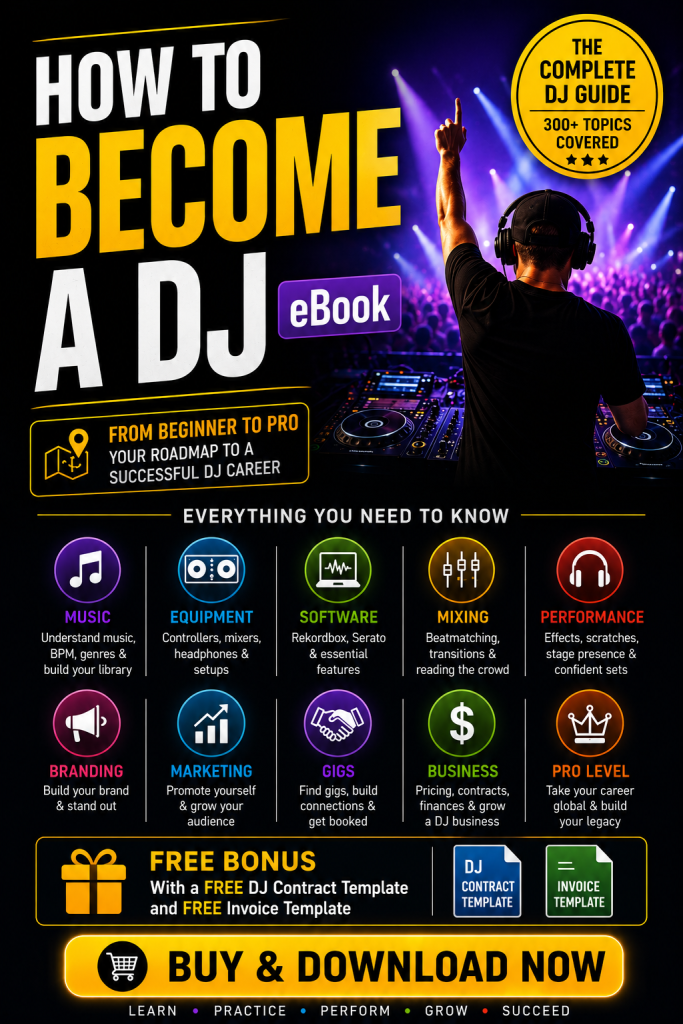

DJing is one of the most exciting and rewarding creative careers and hobbies in the world. Whether you dream of performing at festivals, clubs, weddings, private parties, radio stations, or online livestreams, becoming a DJ opens the door to music, creativity, networking, and income opportunities.
Many successful DJs started with nothing more than a passion for music, a laptop, and the determination to learn. Today, technology has made it easier than ever to begin your journey. You no longer need thousands of pounds worth of vinyl records and expensive club equipment to get started.
In this complete beginner guide, you will learn exactly how to become a DJ, what equipment you need, how to practice, how to get gigs, and how to build your own DJ brand.
A DJ plays and mixes music for an audience. The goal is to create energy, emotion, atmosphere, and entertainment through carefully selected tracks and smooth transitions.
Different DJs perform in different environments, including:
• Nightclubs
• Bars and lounges
• Weddings
• Corporate events
• Festivals
• Radio stations
• Livestream platforms
• Private parties
• Restaurants
• Cruises and holiday resorts
A great DJ understands music, crowd psychology, timing, and performance skills.
There are many different types of DJs and career paths available.
Club DJs perform in bars, lounges, and nightclubs. Their role is to keep the dance floor active and maintain energy throughout the night.
Mobile DJs perform at weddings, birthdays, corporate functions, and private events. They often provide sound systems, microphones, and lighting.
Radio DJs host music shows, interviews, and live broadcasts on radio stations or internet radio platforms.
Festival DJs perform to large crowds and often build international fanbases.
Online DJs perform through platforms like Twitch, YouTube, TikTok, Instagram Live, and Mixcloud.
Many DJs also produce original music, remixes, and edits to help build their brand.
One of the first steps in becoming a DJ is deciding what style of music you want to play.
Popular DJ genres include:
• House music
• Afro House
• Amapiano
• Drum and Bass
• UK Garage
• Hip Hop
• RnB
• Techno
• Trance
• Dancehall
• Reggaeton
• Gospel House
• Funky House
• EDM
• Afrobeat
• Commercial Pop
• Soulful House
• Disco
• Latin music
• Bollywood music
• Open format DJing
Choose music you genuinely love. Passion will help you stay motivated during practice and growth.
One of the biggest myths about becoming a DJ is that you need expensive equipment immediately. You can start with very basic gear and upgrade over time.
A DJ controller is the most popular starting point for beginners. It connects to your laptop and allows you to mix music digitally.
Popular beginner controllers include:
• Pioneer DJ controllers
• AlphaTheta controllers
• Numark controllers
• Hercules controllers
• Denon DJ controllers
Most modern DJs use laptops with DJ software. A reliable computer with good storage and memory is important.
DJ software allows you to organise and mix your music.
Popular DJ software includes:
• Rekordbox
• Serato DJ
• Virtual DJ
• Traktor
• Engine DJ
DJ headphones help you cue and prepare tracks before the audience hears them.
Good quality speakers are essential for practice and performances.
A DJ is only as good as their music collection. Build a high quality music library with properly organised tracks.
Every beginner DJ should master the core fundamentals.
Beatmatching involves syncing the tempo of two tracks so they play smoothly together.
This is one of the most important DJ skills and creates seamless transitions.
Music is structured in phrases. Understanding where to mix tracks helps transitions sound professional.
Using bass, mids, and highs correctly prevents tracks from clashing together.
Cueing allows DJs to prepare the next track before mixing it live.
Managing volume levels keeps your sound balanced and professional.
Successful DJs understand what audiences want and adjust the music accordingly.
Practice is the key to improvement. Even world famous DJs spent years developing their skills.
Practice consistently, even if only for 30 to 60 minutes per day.
Listening back helps identify mistakes and areas for improvement.
Study intros, breakdowns, choruses, drops, and outros.
Experimenting with different styles improves versatility.
Focus on making transitions sound natural and clean.
Your music collection is your identity as a DJ.
Purchase tracks from trusted stores like:
• Beatport
• Traxsource
• Bandcamp
• Amazon Music
• Apple Music
Use playlists, folders, and tags to stay organised.
Follow new releases and music trends regularly.
A DJ name becomes your brand identity.
Your DJ name should be:
• Easy to remember
• Professional
• Unique
• Easy to spell
• Suitable for social media usernames
Avoid complicated names that are difficult to pronounce or search online.
Modern DJing is not just about music. Branding is extremely important.
A professional logo improves credibility.
Platforms to focus on include:
• Instagram
• TikTok
• YouTube
• Facebook
• SoundCloud
• Mixcloud
Upload mixes regularly to showcase your skills.
Share clips, practice sessions, event footage, and music recommendations.
A DJ website helps promote your services and improve visibility online.
Getting your first DJ booking can feel difficult, but consistency and networking make a huge difference.
Begin with:
• House parties
• Community events
• Student events
• Bars
• Small lounges
• Charity events
Relationships are very important in the music industry.
Attend events and introduce yourself professionally.
Promoters often want to hear your sound before booking you.
Send polite emails with:
• Your DJ bio
• Mix links
• Social media profiles
• Experience
• Professional photos
Help venues attract customers through marketing and promotion.
Social media can completely transform your DJ career.
Short video clips perform especially well online.
Ideas include:
• Crowd reactions
• DJ transitions
• Behind the scenes footage
• Equipment setups
• Music recommendations
• Livestream clips
• Event highlights
Consistency is more important than perfection.
Livestreaming allows DJs to build audiences globally.
Popular livestream platforms include:
• Twitch
• YouTube Live
• TikTok Live
• Instagram Live
• Mixcloud Live
Benefits of livestreaming:
• Builds fans
• Improves confidence
• Creates content
• Increases visibility
• Generates income opportunities
Many successful DJs eventually start producing music.
Producing original tracks can help you:
• Gain recognition
• Secure bigger bookings
• Build credibility
• Create your signature sound
• Earn royalties
Popular production software includes:
• Ableton Live
• FL Studio
• Logic Pro
• Cubase
DJing can become a full time career if approached professionally.
Income streams may include:
• Club gigs
• Weddings
• Corporate events
• Festivals
• Livestream donations
• Music production
• Remixing
• Teaching DJ lessons
• Brand sponsorships
• Affiliate marketing
• YouTube revenue
• Merchandise sales
• Event hosting
As your experience grows, you can increase your fees.
Pricing depends on:
• Experience
• Equipment provided
• Event duration
• Travel distance
• Demand
• Location
• Reputation
Always charge professionally and avoid undervaluing your services.
Professional DJs use contracts and invoices to protect themselves and their clients.
A DJ contract should include:
• Event date
• Venue details
• Payment terms
• Cancellation policy
• Equipment responsibilities
• Set times
• Overtime fees
• Technical requirements
Invoices help maintain professionalism and accurate financial records.
Public liability insurance is extremely important for mobile DJs and event performers.
Insurance can help protect against:
• Equipment damage
• Accidents
• Venue requirements
• Legal claims
Many venues require DJs to have valid insurance before performing.
Focus on skills before upgrading equipment.
Volume control matters.
A DJ must adapt to the audience.
Disorganised libraries create stress during performances.
Consistency is essential.
Confidence develops over time through repetition and experience.
Ways to improve confidence:
• Practice regularly
• Record yourself
• Livestream online
• Perform for friends
• Prepare playlists in advance
• Arrive early to gigs
Remember that every successful DJ was once a beginner.
The answer depends on your dedication and consistency.
Some people become competent within a few months, while mastering the art may take years.
The key is consistent improvement.
Absolutely.
Many beginner DJs start with:
• A laptop
• Basic controller
• Free software
• Budget headphones
Skills and creativity matter far more than expensive equipment.
DJing can lead to many exciting opportunities.
These may include:
• International travel
• Festival performances
• Brand partnerships
• Radio hosting
• Music production
• Event management
• Content creation
• Teaching and mentoring
The music industry is competitive, so uniqueness matters.
Ways to stand out include:
• Creating your own edits
• Developing a signature style
• Building a strong online presence
• Producing original music
• Consistent branding
• Professional behaviour
• High quality content creation
Technology continues to transform DJ culture.
Modern DJs now use:
• AI tools
• Streaming platforms
• Cloud libraries
• Advanced controllers
• Social media marketing
• Livestream monetisation
The opportunities for growth are larger than ever before.
Learning how to become a DJ is an exciting journey that combines music, creativity, performance, networking, and entrepreneurship.
You do not need to be perfect to start. Every professional DJ began as a beginner practicing transitions in their bedroom.
The most important ingredients for success are:
• Passion for music
• Consistent practice
• Patience
• Professionalism
• Networking
• Creativity
• Persistence
Start small, stay consistent, and continue improving your craft. With dedication and determination, you can build an incredible DJ career and create unforgettable experiences for audiences around the world.
Most DJs focus only on technical skills.
Successful DJs focus on visibility, relationships and professionalism.
This ebook teaches you how to position yourself as a DJ people want to hire.
You will discover how to:
• Build social proof
• Create trust online
• Develop a recognisable brand
• Use social media strategically
• Build local connections
• Create a reputation for reliability
• Turn one booking into multiple bookings
• Build long term income streams
Whether you want club gigs, weddings, bars, festivals or online opportunities, these principles apply across every area of the DJ industry.
A professional DJ treats their craft like a business.
This section helps you understand:
• DJ pricing strategies
• Setting your rates
• Deposits and payments
• DJ contracts
• Tax basics for DJs
• Budgeting
• Building recurring income
• Managing clients professionally
When you purchase the ebook today, you will also receive:
Protect yourself professionally with a ready to use DJ contract template designed to help you manage bookings, expectations and payments clearly.
Perfect for:
• Wedding DJs
• Club DJs
• Mobile DJs
• Corporate event DJs
• Private party DJs
Save time and present yourself professionally with a clean and easy to use DJ invoice template.
Ideal for:
• Sending invoices to clients
• Tracking payments
• Managing business finances
• Looking more professional
These bonuses alone can help you immediately improve your DJ business image and secure bookings more confidently.
This ebook is ideal for:
• Beginner DJs
• Bedroom DJs
• Club DJs
• Mobile DJs
• Wedding DJs
• Tik Tok DJs
• Instagram DJs
• House music DJs
• EDM DJs
• Gospel DJs
• Open format DJs
• Corporate DJs
• Radio DJs
Whether you are learning for fun, side income or full time career goals, this guide provides practical steps you can apply immediately.
Unlike generic online tutorials, this ebook combines technical DJ knowledge with real world marketing, branding and booking strategies.
It is designed for the modern DJ industry where social media presence, branding and professionalism are just as important as mixing skills.
You are not simply learning how to DJ.
You are learning how to build a complete DJ career.
Avoid beginner mistakes and learn proven DJ career strategies faster.
Study anytime and revisit lessons whenever you need them.
Develop both your technical and business skills.
Learn practical strategies to secure real gigs and grow your reputation.
Understand how successful DJs build multiple revenue streams.
Stand out online and attract opportunities consistently.
This ebook is for anyone who has ever dreamed about becoming a DJ and performing in front of crowds.
It is especially valuable for people searching online for:
• How to become a DJ
• How to get DJ gigs
• How to get nightclub bookings
• How to promote yourself as a DJ
• Beginner DJ guide
• Best DJ ebook
• DJ marketing tips
• DJ branding strategies
• How to become a professional DJ
• DJ social media marketing
• DJ business tips
• How to get wedding DJ bookings
• How to become a Tik Tok DJ
• How to become an Instagram DJ
Every successful DJ career begins with a decision.
A decision to stop waiting.
A decision to learn seriously.
A decision to invest in yourself.
A decision to take action.
The music industry is full of opportunities for DJs who are willing to learn, grow and stay consistent.
Your future gigs, followers, clients and career opportunities all begin with the skills and knowledge you choose to build today.
Whether your dream is to perform in clubs, festivals, weddings, private events or online platforms, this ebook gives you the roadmap to move from beginner to professional.
Do not spend years guessing your way through the DJ industry.
Start building your DJ future with confidence today.
Ready to learn how to become a DJ and get more DJ bookings?
Get instant access today and start building your DJ career with the complete beginner to pro roadmap.
Buy the How to Become a DJ Ebook Now