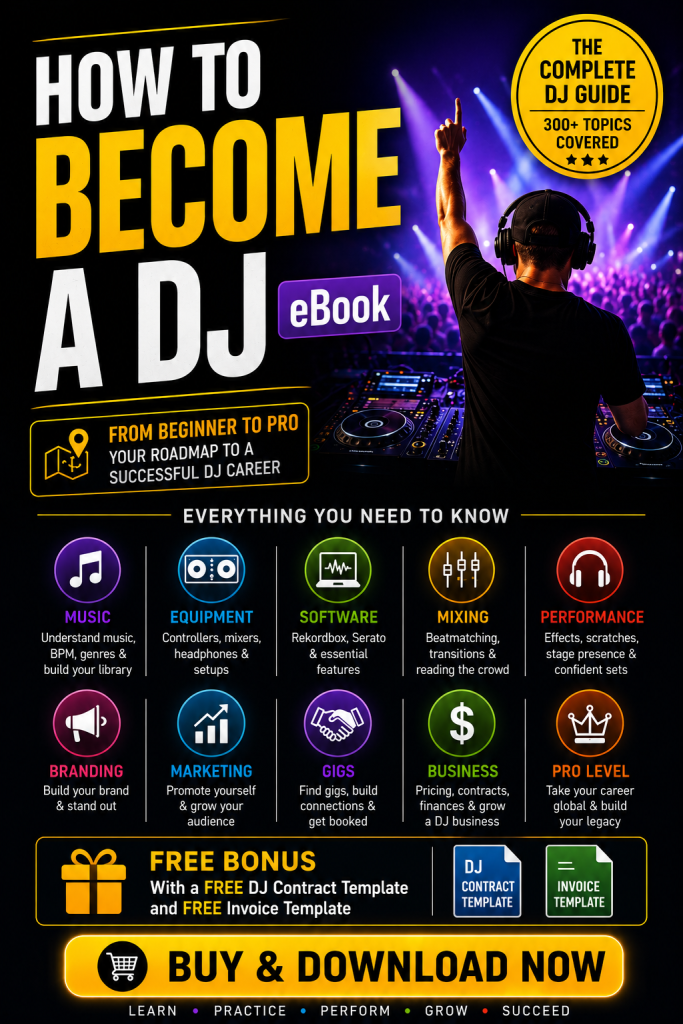


The DJ industry has evolved massively over the last decade. DJs are no longer limited to nightclubs. Today, DJs can perform at:
• Weddings
• Corporate events
• Birthday parties
• Festivals
• Bars and lounges
• Sporting events
• Luxury hotels
• Fashion shows
• Restaurants
• Cruises
• Livestream events
• Social media platforms
• Radio stations
• Church and community events
Many DJs also earn additional income through:
• Music production
• Selling mixes online
• Teaching DJ lessons
• Affiliate marketing
• Brand sponsorships
• YouTube channels
• TikTok content
• Merchandise sales
• Event promotion
With dedication and consistency, a DJ business can grow from a weekend side hustle into a full time career.
Before launching your DJ business, decide what type of DJ you want to become.
Some popular DJ categories include:
Wedding DJs are in high demand and often earn premium fees. This market focuses on professionalism, reliability, crowd reading, and hosting skills.
Club DJs focus on nightlife venues and often specialise in genres like house music, Afro house, hip hop, techno, R&B, or commercial dance music.
Mobile DJs perform at private events and provide their own sound and lighting equipment.
Corporate DJs play at company events, product launches, networking functions, and luxury brand events.
Online DJs build audiences through livestreams, podcasts, YouTube, Mixcloud, Twitch, and TikTok.
You may focus on specific styles such as:
• House music
• Gospel house
• Drum and bass
• UK Garage
• Afrobeats
• Bollywood music
• Amapiano
• Disco
• Old school R&B
• Soulful house
• Reggae
• Latin music
Choosing a niche helps you market yourself more effectively and attract the right audience.
You do not need the most expensive equipment to start a DJ business. However, you do need reliable gear that allows you to perform professionally.
A DJ controller allows you to mix music digitally. Popular beginner options include:
• Pioneer DJ controllers
• AlphaTheta controllers
• Numark controllers
• Denon DJ systems
A reliable laptop is essential for DJ software and music management.
Popular DJ software includes:
• Rekordbox
• Serato DJ
• Virtual DJ
• Traktor Pro
Professional DJ headphones help with cueing and beat matching.
If you are starting as a mobile DJ, invest in quality powered speakers with clear sound and strong bass response.
Especially important for weddings, announcements, and corporate events.
Basic lighting can dramatically improve the atmosphere of events.
Professional DJs always carry backups including:
• USB drives
• Spare cables
• Backup headphones
• Extension leads
• Power adapters
Reliability is one of the fastest ways to build a strong reputation.
Your music collection is the heart of your DJ business.
You should build a legal, organised, and diverse music library covering multiple genres and decades.
• Party classics
• Dance music
• Wedding songs
• Slow songs
• Commercial hits
• Throwback tracks
• Cultural music
• Clean radio edits
• Trending TikTok songs
A professional DJ understands crowd psychology and adapts to different audiences.
• DJ record pools
• Online music stores
• Streaming services for DJs
• Promotional music services
• Independent artists
Always ensure you have high quality audio files.
A strong brand helps people remember you.
Your DJ brand includes:
• DJ name
• Logo
• Colour scheme
• Social media presence
• Website
• Photography
• Music style
• Personality
Choose a DJ name that is easy to remember, professional, and searchable online.
Use the same:
• Profile picture
• Fonts
• Colours
• Tone of voice
• DJ name
Across all platforms.
Professional branding creates trust and helps you stand out from competitors.
Social media is one of the most powerful tools for growing a DJ business.
Perfect for videos, flyers, reels, and event content.
Excellent for viral clips, transitions, mashups, and music discovery.
Upload DJ mixes, tutorials, event highlights, and livestreams.
Useful for networking, local events, and community promotion.
Great for hosting DJ mixes and building listeners.
• DJ performance clips
• Crowd reactions
• Behind the scenes videos
• Setup videos
• Tutorials
• Music recommendations
• Mix snippets
• Event recaps
• Day in the life content
• Livestream sessions
Consistency is more important than perfection.
A website gives your business credibility and improves your chances of getting bookings.
Your DJ website should include:
Clear introduction and professional branding.
Tell your story and explain your DJ style.
Outline the events you cover.
Photos and videos from previous events.
Social proof builds trust.
Make it easy for potential clients to enquire.
Clearly explain your process.
Blog posts improve SEO and help your website rank on Google.
Examples include:
• Best wedding songs
• How to hire a DJ
• Top party playlists
• Event planning tips
• Beginner DJ advice
Treat your DJ business professionally from the beginning.
Depending on your country, you may need to:
• Register as self employed
• Register a business name
• Open a business bank account
• Track taxes and expenses
• Keep invoices and receipts
This helps separate personal finances from business finances.
Insurance is one of the most important parts of running a DJ business.
Many venues will require proof of insurance before allowing you to perform.
Protects you if someone is injured or property is damaged.
Protects your DJ gear from theft, damage, or accidents.
Can help protect against cancelled events.
Insurance gives clients confidence and protects your livelihood.
A DJ contract protects both you and the client.
Never rely only on verbal agreements.
• Event date
• Venue details
• Payment terms
• Deposit amount
• Cancellation policy
• Overtime fees
• Setup times
• Equipment details
• Client responsibilities
• Performance expectations
Contracts reduce misunderstandings and make your business appear professional.
One of the biggest questions beginner DJs ask is how much to charge.
Pricing depends on:
• Experience
• Equipment
• Event type
• Travel distance
• Demand
• Reputation
• Event duration
£100 to £300 per event
£300 to £800 per event
£1,000+ per event
Do not undervalue yourself long term.
Instead of competing only on price, compete on:
• Professionalism
• Reliability
• Branding
• Customer experience
• Music quality
• Reviews
A successful DJ business is also a marketing business.
If nobody knows you exist, getting bookings becomes difficult.
Optimise your website for search terms like:
• Wedding DJ near me
• House music DJ
• Corporate DJ London
• Mobile DJ services
• Party DJ hire
Create a local business listing to appear in Google Maps.
Build relationships with:
• Wedding planners
• Event venues
• Photographers
• Promoters
• Videographers
• Caterers
Still effective for local promotion.
Build an email list from enquiries and events.
Encourage happy clients to recommend you.
Word of mouth remains one of the most powerful marketing tools in the DJ industry.
Getting started is often the hardest stage.
• Offer to DJ small parties
• Perform at community events
• Upload mixes online
• Network with local venues
• Partner with promoters
• Offer discounted launch packages
• Ask friends and family for referrals
• Post content consistently online
Every booking helps build momentum and confidence.
Positive reviews are incredibly valuable.
After each successful event, ask clients for:
• Google reviews
• Facebook recommendations
• Video testimonials
• Written feedback
Social proof increases trust and conversions.
Running a successful DJ business requires constant learning.
• Mixing
• Beat matching
• Microphone confidence
• Music programming
• Crowd reading
• Event hosting
• Marketing
• Branding
• Negotiation
• Social media strategy
The best DJs never stop learning.
Once you gain momentum, you can scale your business further.
Create a multi operator DJ agency.
• Photo booths
• Lighting packages
• Event hosting
• Dance floors
• LED screens
• Cold spark machines
Create:
• DJ ebooks
• DJ templates
• Online courses
• Music playlists
• Sample packs
Monetise social media platforms and YouTube channels.
Run your own events and build your own audience.
Avoid these common errors:
• Arriving late
• Poor sound quality
• Ignoring contracts
• Not having backups
• Underpricing too long
• Posting inconsistent branding
• Poor communication with clients
• Buying unnecessary gear too early
• Ignoring marketing and SEO
Professionalism matters just as much as DJ skills.
| Pros | Cons |
|---|---|
| Flexible schedule | Weekend work |
| Creative career | Competitive industry |
| Potential high income | Equipment costs |
| Travel opportunities | Late nights |
| Meet new people | Requires marketing skills |
| Build personal brand | Income can fluctuate |
| Fun and rewarding | Physical setup demands |
DJ income varies significantly depending on experience and reputation.
£5,000 to £20,000 per year
£30,000 to £70,000 per year
£100,000+ possible with strong branding and demand
Additional revenue streams can dramatically increase earnings.
Starting a DJ business takes commitment, consistency, patience, and professionalism. The good news is that there has never been a better time to become a DJ.
With affordable technology, powerful social media platforms, online marketing opportunities, and growing demand for entertainment, DJs can now build successful brands from almost anywhere in the world.
Focus on improving your skills, building relationships, creating a strong online presence, and delivering excellent customer experiences at every event.
Every successful DJ started as a beginner. The key is to keep learning, stay consistent, and continue building momentum one booking at a time.
If you genuinely love music, enjoy entertaining people, and are willing to put in the work, starting a DJ business could become one of the most rewarding decisions you ever make.
Most DJs focus only on technical skills.
Successful DJs focus on visibility, relationships and professionalism.
This ebook teaches you how to position yourself as a DJ people want to hire.
You will discover how to:
• Build social proof
• Create trust online
• Develop a recognisable brand
• Use social media strategically
• Build local connections
• Create a reputation for reliability
• Turn one booking into multiple bookings
• Build long term income streams
Whether you want club gigs, weddings, bars, festivals or online opportunities, these principles apply across every area of the DJ industry.
A professional DJ treats their craft like a business.
This section helps you understand:
• DJ pricing strategies
• Setting your rates
• Deposits and payments
• DJ contracts
• Tax basics for DJs
• Budgeting
• Building recurring income
• Managing clients professionally
When you purchase the ebook today, you will also receive:
Protect yourself professionally with a ready to use DJ contract template designed to help you manage bookings, expectations and payments clearly.
Perfect for:
• Wedding DJs
• Club DJs
• Mobile DJs
• Corporate event DJs
• Private party DJs
Save time and present yourself professionally with a clean and easy to use DJ invoice template.
Ideal for:
• Sending invoices to clients
• Tracking payments
• Managing business finances
• Looking more professional
These bonuses alone can help you immediately improve your DJ business image and secure bookings more confidently.
This ebook is ideal for:
• Beginner DJs
• Bedroom DJs
• Club DJs
• Mobile DJs
• Wedding DJs
• Tik Tok DJs
• Instagram DJs
• House music DJs
• EDM DJs
• Gospel DJs
• Open format DJs
• Corporate DJs
• Radio DJs
Whether you are learning for fun, side income or full time career goals, this guide provides practical steps you can apply immediately.
Unlike generic online tutorials, this ebook combines technical DJ knowledge with real world marketing, branding and booking strategies.
It is designed for the modern DJ industry where social media presence, branding and professionalism are just as important as mixing skills.
You are not simply learning how to DJ.
You are learning how to build a complete DJ career.
Avoid beginner mistakes and learn proven DJ career strategies faster.
Study anytime and revisit lessons whenever you need them.
Develop both your technical and business skills.
Learn practical strategies to secure real gigs and grow your reputation.
Understand how successful DJs build multiple revenue streams.
Stand out online and attract opportunities consistently.
This ebook is for anyone who has ever dreamed about becoming a DJ and performing in front of crowds.
It is especially valuable for people searching online for:
• How to become a DJ
• How to get DJ gigs
• How to get nightclub bookings
• How to promote yourself as a DJ
• Beginner DJ guide
• Best DJ ebook
• DJ marketing tips
• DJ branding strategies
• How to become a professional DJ
• DJ social media marketing
• DJ business tips
• How to get wedding DJ bookings
• How to become a Tik Tok DJ
• How to become an Instagram DJ
Every successful DJ career begins with a decision.
A decision to stop waiting.
A decision to learn seriously.
A decision to invest in yourself.
A decision to take action.
The music industry is full of opportunities for DJs who are willing to learn, grow and stay consistent.
Your future gigs, followers, clients and career opportunities all begin with the skills and knowledge you choose to build today.
Whether your dream is to perform in clubs, festivals, weddings, private events or online platforms, this ebook gives you the roadmap to move from beginner to professional.
Do not spend years guessing your way through the DJ industry.
Start building your DJ future with confidence today.
Ready to learn how to become a DJ and get more DJ bookings?
Get instant access today and start building your DJ career with the complete beginner to pro roadmap.
Buy the How to Become a DJ Ebook Now