


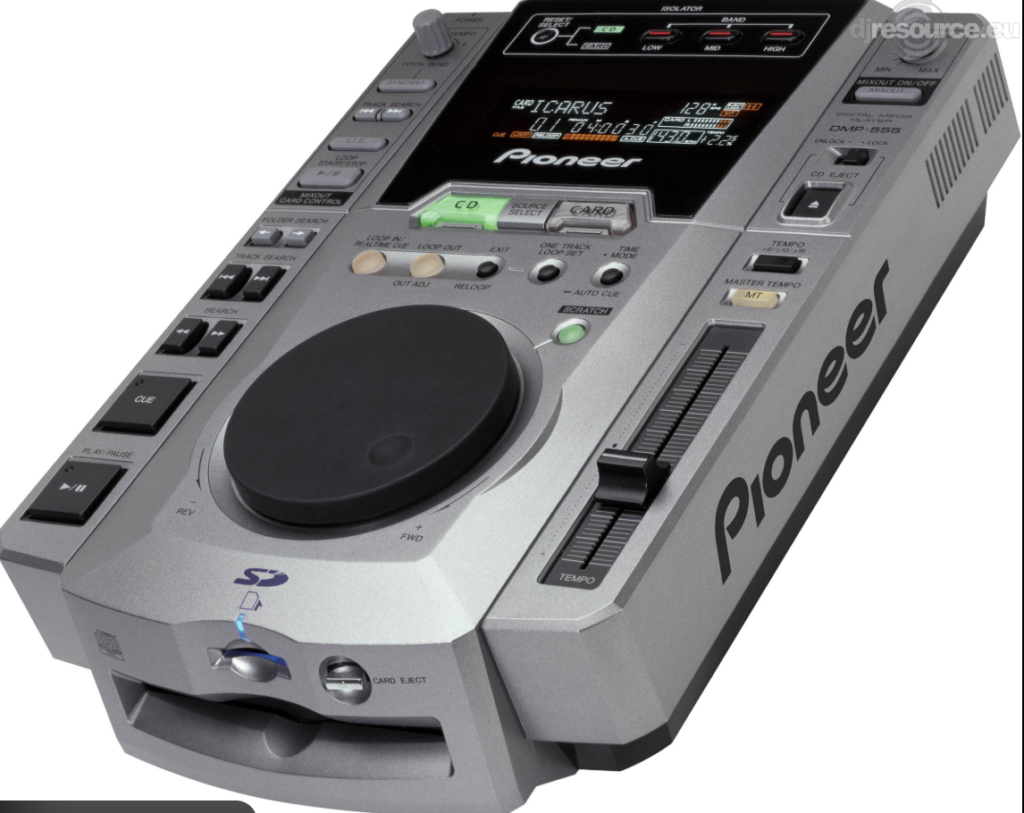
The Pioneer DMP-555 is not just another DJ player. It is a bold, visionary piece of technology that arrived years before the industry was truly ready for it. Released in the early 2000s, this unique digital media player pushed boundaries and redefined what DJs could expect from their equipment. Even today, revisiting the DMP-555 feels like uncovering a hidden chapter in DJ history—one filled with ambition, innovation, and untapped potential.
This review takes a deep, optimistic look at what makes the Pioneer DMP-555 so special, why it still sparks curiosity, and whether it holds value for modern DJs or collectors seeking something truly unique.
When the DMP-555 launched, the DJ world was still deeply rooted in vinyl and CDs. Digital DJing was emerging but far from mainstream. Pioneer took a bold leap by introducing a device that embraced MP3 playback and SD card storage, effectively predicting the future of DJ workflows.
At its core, the DMP-555 was designed to bridge the gap between traditional DJing and the digital revolution. It allowed DJs to play music from CDs while simultaneously accessing tracks from an SD card, an idea that was groundbreaking at the time.
This was more than innovation—it was a statement. Pioneer wasn’t just following trends; it was creating them.
The first impression of the DMP-555 is one of familiarity blended with curiosity. It resembles early CDJ units but introduces subtle differences that hint at its advanced capabilities. The layout is clean, with a responsive jog wheel that supports scratching, pitch bending, and precise cueing.
The jog wheel itself deserves attention. It offers a tactile, vinyl-like feel that was inspired by the flagship CDJ-1000. For DJs transitioning from vinyl, this made the DMP-555 approachable and expressive.
Its compact design also makes it portable and versatile, ideal for DJs who wanted to experiment with new formats without overhauling their entire setup.
The Pioneer DMP-555 is packed with features that were far ahead of its time. It is easy to overlook just how revolutionary these were when they first appeared.
One of the most notable features is dual media playback. The ability to play from both CD and SD card simultaneously meant that a single unit could function almost like two decks. This opened up creative mixing possibilities that were virtually unheard of in 2002.
Another standout innovation is MP3 compatibility. At a time when many DJs questioned the quality and usability of digital files, the DMP-555 embraced them fully.
The inclusion of a sync function—matching BPM between tracks—was also groundbreaking. Today, sync buttons are common, but back then, this was a glimpse into the future of DJ automation.
Additional features include real-time looping, pitch control, and onboard EQ isolators. These tools gave DJs more creative control and helped shape the modern performance style we see today.
Using the DMP-555 feels like stepping into an alternate timeline where digital DJing evolved faster than expected. The workflow is intuitive once understood, but it does require a shift in mindset compared to traditional setups.
The ability to cue one track while another plays on the same unit is particularly impressive. It encourages experimentation and challenges DJs to think differently about mixing.
Sound quality is solid, especially for its era. While early MP3 skepticism was understandable, the DMP-555 proved that digital formats could hold their own in live performance settings.
However, the learning curve can be steep. At the time of release, DJs were unfamiliar with SD cards and digital file management, which made adoption slower than Pioneer anticipated.
The biggest benefit of the DMP-555 is its forward-thinking design. It offers a glimpse into the evolution of DJ technology and serves as a reminder of how innovation shapes the industry.
Its versatility is another major advantage. Being able to use both CDs and SD cards provides flexibility that even some modern setups lack.
For collectors and enthusiasts, the DMP-555 is a rare gem. It represents a pivotal moment in DJ history and stands out as one of the most experimental products Pioneer ever created.
Additionally, its compact size and dual functionality make it an intriguing option for minimalist setups or creative performances.
The Pioneer DMP-555 excels in innovation, creativity, and historical significance. Its ability to combine multiple media formats into one unit is a major strength, along with its unique dual-output functionality.
The jog wheel performance and looping features also contribute to a satisfying hands-on experience.
On the downside, the technology was arguably too advanced for its time. The required software and workflow were not always user-friendly, and early computers struggled to keep up.
Another drawback is availability. The DMP-555 had a short production run and is no longer widely sold, making it harder to find and maintain.
When the Pioneer DMP-555 was originally released, it was considered a premium product, with prices reportedly around $1000 (approximately £800 at the time).
In today’s market, the DMP-555 is typically found second-hand. Prices vary depending on condition and availability. For example, a pair of units has been listed for around £573, which is roughly $720, suggesting individual units may range between £250–£400 ($300–$500).
This makes it an आकर्षive option for collectors or DJs looking to own a piece of pioneering technology without the original high price tag.
The Pioneer DMP-555 is not aimed at beginners looking for plug-and-play simplicity. Instead, it appeals to DJs who appreciate innovation, history, and experimentation.
If you are someone who enjoys exploring unique gear and pushing creative boundaries, the DMP-555 offers an experience unlike anything else.
Collectors will also find it highly desirable due to its rarity and significance in the evolution of DJ equipment.
The Pioneer DMP-555 is a fascinating piece of DJ history that continues to inspire curiosity and admiration. It may not have achieved widespread success during its release, but its influence is undeniable.
This is a device that dared to imagine the future—and in many ways, it succeeded. Features that seemed revolutionary at the time are now standard in modern DJ equipment.
What makes the DMP-555 truly special is its boldness. It represents a moment when innovation took precedence over convention, and that spirit is something every DJ can appreciate.
If you are looking for something different, something meaningful, and something that tells a story, the Pioneer DMP-555 is worth your attention.