
How to Become a Salsa DJ
If you have ever felt that pull when a salsa record drops, when the rhythm locks in and the dancefloor moves as one, then you already understand why becoming a salsa DJ is such a powerful and rewarding journey. I’m Jerry Frempong, a UK based DJ with over 25 years behind the decks, and I’ve spent my life playing salsa, Latin, and dance music across clubs, festivals, radio, private parties, and international events. This guide is written from real experience, not theory, and it’s here to show you exactly how to become a salsa DJ in a way that is authentic, sustainable, and respected by dancers and promoters alike.
Becoming a salsa DJ is about much more than pressing play. It is about understanding salsa music history, mastering DJ equipment, reading a dancefloor, and developing your own musical identity. When you combine technical DJ skills with deep musical knowledge and confidence, you don’t just play tracks, you create unforgettable nights. This is why learning properly from the beginning matters so much if you want to stand out in the salsa DJ scene.
Understanding What Makes a Great Salsa DJ
To become a successful salsa DJ, you must first respect the music. Salsa is rooted in Afro-Cuban rhythms, Puerto Rican influences, New York Latin culture, and decades of musical evolution. A great salsa DJ understands classic salsa dura, romantic salsa, mambo, son montuno, and modern salsa, and knows how to blend them naturally. DJs who rush this stage often struggle later, because dancers can instantly feel when a DJ lacks musical depth.
When I started DJing, vinyl was king, and every mix required precision and patience. That foundation taught me discipline, timing, and musical intuition, all of which still apply today whether you use a DJ controller, CDJs, or turntables. The fundamentals never change, only the tools do.
Learning the Core DJ Skills for Salsa Music
If you are serious about how to become a salsa DJ, you must focus on beat matching, phrasing, tempo control, EQ use, and smooth transitions. Salsa dancers rely heavily on consistent rhythm and musical flow. Sudden volume jumps, poor transitions, or clashing tempos can empty a floor quickly. Learning to mix salsa properly means understanding song structures, intros, breaks, coro sections, and endings.
A professional salsa DJ also understands energy management. Early evening sets require elegance and groove, peak-time sets need power and drive, and late-night sets demand emotion and connection. These skills are developed through guided practice, honest feedback, and real-world experience, not guesswork.
Choosing the Right DJ Equipment to Start Your Journey
Modern salsa DJs can start with a DJ controller connected to a laptop, which is an excellent and affordable way to learn. Controllers teach you library management, cue points, looping, and digital mixing techniques. CDJs are the club standard worldwide and learning them prepares you for professional venues and festivals. Vinyl turntables, while more challenging, develop exceptional timing and musical sensitivity and are still respected across the industry.
Understanding all three platforms makes you versatile and employable. Promoters trust DJs who can walk into any setup and deliver confidently. This is one of the biggest advantages of structured DJ training instead of self-teaching alone.
Practising with Iconic Salsa Tracks That Shape Your Ear
To truly understand salsa DJing, you must practise with music that has defined dancefloors for decades. Tracks from the golden era teach phrasing, rhythm control, and emotional storytelling. When you practise with these records, you develop an instinct for what dancers expect and love.
Some of the most important salsa tracks to practise mixing and programming with include music by Willie Colón and his track Idilio, Héctor Lavoe with Aguanilé, Rubén Blades and Pedro Navaja, El Gran Combo with Me Liberé, Celia Cruz and Quimbara, Johnny Pacheco with Mi Gente, Fania All-Stars and Mi Gente, Eddie Palmieri with Azúcar, Ray Barretto and Indestructible, and Ismael Rivera with Las Caras Lindas. These songs help build musical discipline and a strong salsa DJ foundation.
Why Structured DJ Training Makes All the Difference
Many aspiring DJs ask if they can learn everything online. While tutorials are useful, they rarely give you personalised feedback, industry insight, or real confidence behind the decks. Learning how to become a salsa DJ with an experienced mentor fast-tracks your progress and helps you avoid costly mistakes.
With over 25 years of professional DJ experience, playing across the UK and internationally, releasing music, appearing on radio, performing in clubs, festivals, and private events, I bring real-world knowledge into every lesson. This experience allows me to teach not just how to mix, but how to think like a professional DJ, how to handle crowds, how to work with promoters, and how to build a reputation that leads to consistent bookings.
What a Beginner Salsa DJ Course Should Really Teach You
A solid beginner DJ course should guide you from absolute basics through to confident performance. You should learn how to set up and operate a DJ controller efficiently, how to manage your salsa music library properly, and how to understand BPM, key, and phrasing. As you progress, you should be introduced to CDJs so you feel comfortable in club environments, and vinyl so you understand timing, touch, and musical control at a deeper level.
You should also learn how to structure a salsa set, how to warm up a room, how to build peak-time energy, and how to close a night memorably. A strong course teaches microphone confidence, professional etiquette, sound system basics, and how to adapt to different dance communities. These skills are essential if you want to DJ salsa at a high level and be respected within the scene.
Turning Your Passion Into Real DJ Opportunities
Learning how to become a salsa DJ is not only about music, it’s about believing in yourself and presenting yourself professionally. When you know your craft, opportunities naturally follow. Dance schools need reliable DJs, promoters need consistent performers, and private clients want someone they can trust. Confidence comes from preparation, and preparation comes from quality training.
There is nothing quite like the feeling of controlling a dancefloor, watching hundreds of people move together because of the music you selected. That feeling never gets old, even after decades in the game. Salsa DJing offers community, creativity, travel, and genuine connection, and it all starts with the decision to take your passion seriously.
Have you ever dreamed of becoming the DJ who fills dance floors with infectious Latin rhythms, powerful percussion, energetic horns, and unforgettable Salsa classics? Imagine controlling the atmosphere of packed clubs, Latin dance nights, weddings, festivals, beach parties, and special events while people dance all night to your mixes.
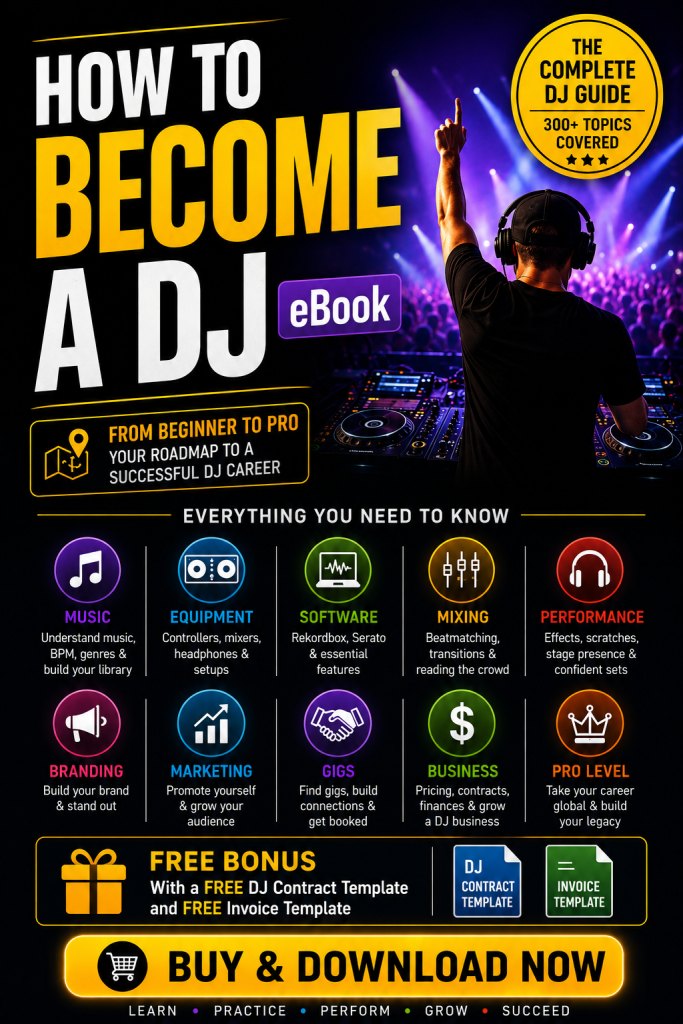
“How to Become a DJ” is the complete roadmap designed to help aspiring DJs transform their passion for Salsa music into a real skill, brand, and potentially a profitable career. Whether you are a total beginner or already experimenting with mixing music at home, this powerful ebook gives you the knowledge, confidence, and practical guidance needed to become a successful Salsa DJ.
This is not just another generic DJ guide. This ebook is specially valuable for anyone wanting to understand how to become a Salsa DJ, Latin DJ, Afro Latin DJ, or Latin House DJ while mastering the foundations of professional DJing.
If you love Salsa, Bachata, Merengue, Latin House, Cuban rhythms, Afro Latin percussion, and dance culture, this guide was made for you.
Latin music has become one of the fastest growing music genres worldwide. Salsa events, Latin dance nights, Caribbean festivals, weddings, cultural celebrations, and social dance communities are constantly searching for talented DJs who understand rhythm, timing, crowd energy, and authentic Latin music selection.
A skilled Salsa DJ is more than somebody who presses play.
You become:
• The energy controller of the dance floor
• The musical storyteller of the night
• The person who keeps dancers moving for hours
• A respected figure in the Latin music community
• A professional entertainer with earning potential
This ebook teaches you exactly how to start building those skills from day one.
This complete DJ guide covers every stage of becoming a successful Salsa DJ, from absolute beginner to professional performer.
Learn the fundamentals of DJ culture, DJ terminology, performance basics, and how modern DJs build successful careers.
Discover how to understand BPM, rhythm, timing, percussion patterns, musical phrasing, song structure, transitions, and Latin groove selection. This section is especially valuable for Salsa DJs who need to understand musical flow and dance energy.
Learn how to choose the best DJ controller, turntables, headphones, speakers, mixers, and beginner DJ setups without overspending.
Master the leading DJ software platforms including:
• Rekordbox
• Serato DJ
• Virtual DJ
• Traktor
Understand cue points, looping, beat grids, playlists, and music organisation.
One of the most important sections for aspiring Salsa DJs.
Learn:
• Beat matching
• Smooth transitions
• EQ control
• Tempo blending
• Crossfader techniques
• Creating seamless Salsa sets
• Mixing Salsa with Bachata and Latin House
Develop professional performance techniques that help you stand out during live events and club performances.
Learn how to build your unique DJ image, create a memorable DJ name, develop social media branding, and position yourself in the Latin music scene.
Discover powerful DJ marketing strategies including:
• Instagram growth
• TikTok promotion
• YouTube DJ mixes
• Facebook event promotion
• SEO for DJs
• Building an email list
• Growing a Salsa DJ audience online
Find out how to:
• Get booked at Salsa clubs
• Approach Latin event promoters
• Perform at dance socials
• DJ weddings and private parties
• Build relationships with dance schools and instructors
• Create professional DJ demo mixes
Learn how to run your DJ career like a real business with guidance on:
• Pricing your services
• DJ contracts
• Invoicing clients
• Taxes and finances
• Building recurring income
• Professional communication
Take your career further by learning how DJs create edits, remixes, intros, mashups, and original music productions.
Level up your performances with crowd reading, advanced transitions, live remixing, creative effects, and performance confidence.
DJ life can become demanding. Learn how to balance late nights, travel, fitness, motivation, creativity, and mental wellbeing.
The final chapter helps you transition from hobby DJ to professional Salsa DJ with guidance on:
• International branding
• Festival bookings
• Sponsorships
• Networking
• Creating a signature sound
• Building long term success
One of the biggest fears many aspiring DJs face is not knowing where to start.
This ebook was written specifically for beginners in a clear, motivating, step by step format that removes confusion and helps you build confidence quickly.
You do not need:
• Previous DJ experience
• Expensive equipment
• Music production knowledge
• Industry connections
You simply need passion, consistency, and the right guidance.
When you purchase this ebook, you will also receive two valuable professional bonus resources completely free.
Protect yourself professionally with a ready to use DJ contract template designed for:
• Weddings
• Private parties
• Corporate events
• Club bookings
• Latin dance events
Get paid professionally using a simple and clean DJ invoice template perfect for freelance DJs and event bookings.
These bonus resources can save you time, increase professionalism, and help you operate like a serious DJ from the beginning.
This ebook is optimised around the most searched DJ topics and Salsa DJ related interests including:
• How to Become a Salsa DJ
• Beginner DJ Guide
• Latin DJ Training
• Salsa Music DJ Course
• Best DJ Ebook for Beginners
• How to DJ Salsa Music
• DJ Mixing Guide
• Latin Music DJ Tips
• How to Start DJing
• Professional DJ Guide
• DJ Branding Tips
• DJ Marketing Strategies
• Best DJ Software
• How to Get DJ Gigs
• DJ Equipment for Beginners
• Learn DJing Online
• Mobile DJ Business Guide
• Wedding DJ Tips
• Club DJ Training
• Afro Latin DJ Guide
There has never been a better time to become a Salsa DJ.
Latin music continues to dominate dance floors around the world. Salsa communities are growing rapidly, social dancing is more popular than ever, and skilled DJs are constantly in demand.
The difference between people who dream about becoming DJs and people who actually succeed often comes down to one thing:
Taking action.
This ebook gives you the roadmap, knowledge, and confidence to start your journey properly and avoid years of costly mistakes and confusion.
Whether your goal is to DJ local Salsa nights, become a respected Latin music selector, perform internationally, or simply learn an exciting new skill, this guide will help you move forward with clarity and motivation.
Ready to begin your DJ journey?
Click here to buy the How to Become a DJ ebook on Shopify