
How to Become an Open Format DJ
If you’ve ever watched a DJ control a room, shift the mood with one record, then flip the energy with another, you already understand the magic of open format DJing. This is the most flexible, creative and in-demand style of DJing in the world right now. As someone who’s been DJing for over 25 years across clubs, festivals, radio, private parties and international stages, I can tell you this straight: becoming an open format DJ is one of the most rewarding musical journeys you can take.
Open format DJing isn’t about sticking to one sound. It’s about reading people, understanding music across decades, cultures and genres, and confidently blending hip hop, R&B, house, afrobeats, pop, dancehall, funk, disco and everything in between. If you want DJ skills that keep you booked, respected and adaptable in any environment, open format is where it starts.
This guide will show you exactly how to become an open format DJ, what skills you need, how to practice properly, what equipment to learn on, and why learning from an experienced DJ with real-world knowledge accelerates your progress faster than trying to figure it all out alone.
What an Open Format DJ Really Is
An open format DJ is not a jukebox and not a genre specialist. An open format DJ understands music history, crowd psychology and timing. You’re the person who can play a hip hop classic, follow it with a house groove, flip into an afrobeats anthem and still keep the dancefloor locked. This style dominates clubs, bars, weddings, corporate events, festivals and private parties because it works everywhere.
To succeed as an open format DJ, you must build deep musical knowledge, technical confidence on multiple DJ setups and the ability to adapt instantly. This is why open format DJs are consistently among the highest-paid and most in-demand DJs worldwide.
The Mindset You Need to Become an Open Format DJ
Before touching equipment, your mindset matters. Open format DJing is about service and leadership. You’re guiding the night, not forcing your taste. The best open format DJs stay curious, constantly dig for music, understand trends and respect the classics. You must love learning new sounds while mastering old ones.
Confidence comes from preparation. When you know your music and understand your tools, nerves disappear and creativity takes over. This is why structured DJ training matters so much in the early stages.
Learning DJ Skills the Right Way From Day One
One of the biggest mistakes beginners make is jumping straight into advanced tricks without mastering foundations. Open format DJing demands strong basics because you’re switching styles, tempos and energies constantly. Beatmatching, phrasing, EQ control, transitions and crowd reading must become second nature.
Learning with an experienced DJ who has over 25 years in the industry makes a massive difference. Real-world experience from playing clubs, festivals, radio, private events and international venues gives context you simply can’t get from short online clips. When you’re guided by someone who has released music, played across the world and adapted through every era of DJing, you learn faster, avoid bad habits and gain insider knowledge that books don’t teach.
Understanding DJ Equipment for Open Format DJs
A true open format DJ must feel comfortable on all major DJ setups. This includes DJ controllers, CDJs and vinyl turntables. Each teaches you different skills and sharpens your musical instincts.
DJ controllers are perfect for beginners because they combine affordability, portability and powerful software control. They allow you to learn beatmatching, looping, cue points, effects and library management efficiently. Controllers are widely used for practice, home setups and many professional gigs.
CDJs are the industry standard in clubs and festivals worldwide. Learning CDJs prepares you for real-world club environments and teaches you precision, discipline and confidence. When you can walk into any booth and play without fear, your DJ career opens up fast.
Vinyl teaches feel, timing and musical respect. Even if you don’t plan to play vinyl professionally, learning on turntables sharpens your ears and touch. It builds a deeper connection to music and improves your timing across all formats.
An open format DJ course that covers all three setups gives you complete confidence and long-term flexibility.
How to Practice Like a Real Open Format DJ
Practice isn’t about pressing buttons for hours. It’s about intentional improvement. Record your mixes, listen back critically and refine your transitions. Practice genre switching, energy control and timing. Learn how to move from slow to fast tempos smoothly and how to reset a room when energy drops.
Digging for music is part of practice. Build playlists by era, genre and mood. Understand which songs open a set, peak a set and close a night. Over time, this becomes instinctive, but early guidance shortens the learning curve massively.
Popular Songs From the Era to Practice With
To build strong open format DJ skills, practicing with proven crowd-friendly records helps you understand structure and energy. Songs like Michael Jackson – Billie Jean, Notorious B.I.G. – Juicy, Jay-Z – Empire State of Mind, Usher – Yeah!, Daft Punk – One More Time, Rihanna – Don’t Stop The Music, Kanye West – Stronger, Black Eyed Peas – I Gotta Feeling, Missy Elliott – Get Ur Freak On and 50 Cent – In Da Club are excellent records to practice transitions, timing and crowd control.
These tracks teach you how familiar music connects instantly and why knowing classics is just as important as knowing new releases.
Building Your DJ Brand and Confidence
Becoming an open format DJ isn’t just technical. It’s about presence, confidence and professionalism. Showing up prepared, understanding your audience and delivering consistent energy builds your reputation quickly. Every gig is a chance to learn, refine and grow.
Learning from an experienced DJ who has played on radio, released music, toured internationally and worked across every type of event gives you a blueprint for success. You gain insight into booking, set preparation, music programming and longevity in the industry.
Beginner DJ Course Outline for Open Format DJs
A strong beginner DJ course starts with understanding DJ equipment and basic music theory, then progresses into beatmatching, phrasing, EQ mixing and smooth transitions. You learn controller skills first, then move onto CDJs to prepare for club environments, followed by vinyl training to develop timing and musical sensitivity.
The course then focuses on open format set building, genre blending, reading crowds and handling real-world situations. You learn how to prepare playlists, manage music libraries, understand sound systems and perform confidently under pressure. This type of structured training saves years of trial and error.
Learning with a DJ who has over 25 years of professional experience means every lesson is rooted in reality, not theory. You benefit from stories, mistakes, successes and proven methods that work in clubs, festivals, radio and private events around the world.
Why Investing in Professional DJ Training Changes Everything
When you learn alone, progress is slow and inconsistent. When you learn with a seasoned DJ, progress accelerates. You build confidence, clarity and direction. You avoid common mistakes and develop habits that support long-term success.
Open format DJing rewards those who take the craft seriously. With the right training, the right mindset and the right mentor, you can go from beginner to confident performer faster than you ever thought possible.
Do you dream of controlling the energy of a packed dancefloor, mixing multiple music genres seamlessly, and becoming the DJ everyone remembers after the party ends?
Have you ever wanted to learn how to DJ weddings, clubs, corporate events, birthdays, bars, festivals, luxury events, and private parties while building a profitable business doing what you love?
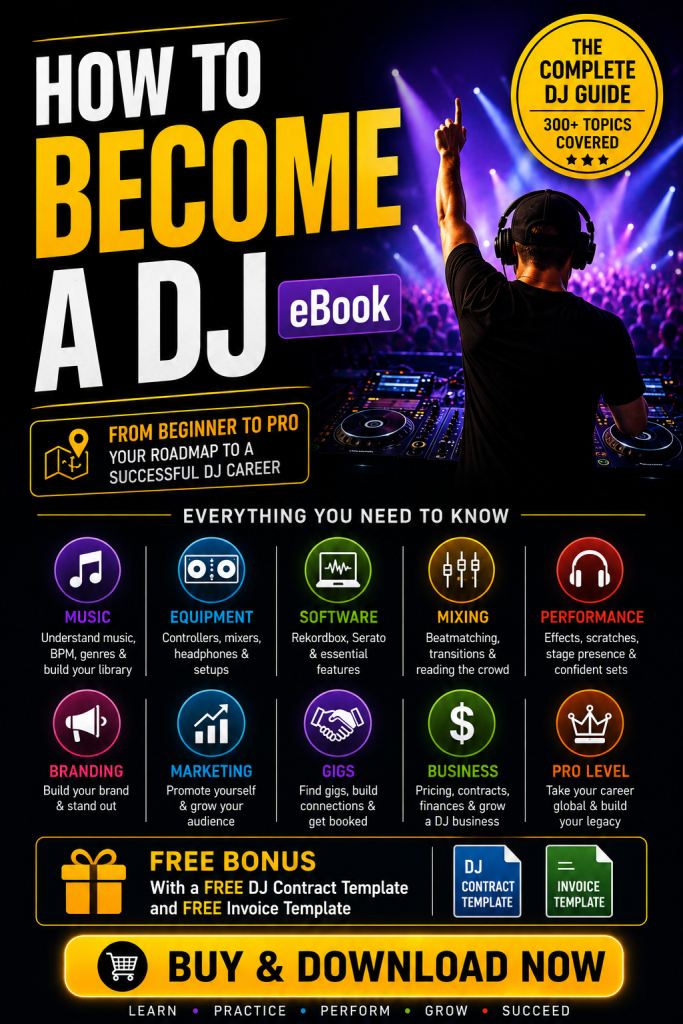
“How to Become a DJ” is the complete step by step DJ ebook designed to help beginners become confident, professional Open Format DJs from the ground up.
Whether you are completely new to DJing or already experimenting with mixing at home, this powerful guide gives you the roadmap to develop the skills, confidence, branding, and business knowledge needed to succeed in today’s competitive DJ industry.
Unlike niche DJs who focus on only one genre, Open Format DJs are among the most in demand DJs in the world. They can adapt to any crowd, play multiple music styles, and keep audiences engaged all night long. This flexibility creates more booking opportunities, higher earning potential, and long term career stability.
This ebook teaches you exactly how to become that DJ.
From understanding DJ equipment and software to mastering crowd control, branding, marketing, and securing paid gigs, this is your all in one DJ success blueprint.
Open Format DJs are versatile entertainers capable of mixing multiple genres and reading diverse crowds in real time. They are trusted at:
• Weddings
• Corporate events
• Luxury parties
• Clubs
• Festivals
• Birthday parties
• Student events
• Fashion shows
• Sporting events
• Private functions
• Rooftop bars
• Hotel venues
• Radio stations
• Brand launches
An Open Format DJ may play:
• House music
• Hip Hop
• RnB
• Afrobeats
• Dancehall
• Amapiano
• Garage
• Pop
• Commercial dance
• Funky House
• Soul
• Classics
• Party anthems
• Reggaeton
• Drum and Bass
• Throwback hits
This ability to adapt makes Open Format DJs some of the highest booked DJs worldwide.
If you want more gigs, more opportunities, and more income potential, becoming an Open Format DJ is one of the smartest paths you can take.
This comprehensive DJ training guide covers every major aspect of becoming a successful professional DJ.
Start with the foundations of DJ culture, the history of DJing, and what separates amateur DJs from professionals.
Learn:
• Different types of DJs
• How DJ careers work
• DJ terminology
• Understanding DJ setups
• Choosing your DJ direction
• Building confidence as a beginner
One of the biggest secrets of successful DJs is musical understanding.
Inside this section you will learn:
• BPM and tempo
• Song structure
• Beat matching
• Musical phrasing
• Energy management
• Genre transitions
• Reading crowds
• Creating emotional journeys through music
This section alone can dramatically improve your mixes and crowd reactions.
Confused about DJ gear?
This ebook explains everything clearly and simply.
Learn about:
• DJ controllers
• Turntables
• CDJs
• Mixers
• Headphones
• Speakers
• Microphones
• Audio interfaces
• Cables and connections
• Portable DJ setups
Discover what equipment beginners actually need and avoid wasting money on unnecessary gear.
Learn the industry standard DJ software platforms including:
• Rekordbox
• Serato DJ
• Virtual DJ
• Traktor
You will understand:
• Music importing
• Cue points
• Loops
• Effects
• Library organisation
• Playlist creation
• USB preparation
• Performance settings
This is where the real magic happens.
You will learn:
• Beat matching
• EQ mixing
• Blending tracks
• Smooth transitions
• Harmonic mixing
• Mixing different genres
• Creating energy flow
• Professional transitions for Open Format DJs
Perfect for beginners wanting to sound polished and professional quickly.
Take your DJ performances to the next level with advanced techniques such as:
• Scratching
• Performance tricks
• Creative transitions
• Live remixing
• Crowd interaction
• Stage confidence
• Microphone skills
Learn how to create a professional DJ brand that stands out.
Discover:
• Choosing your DJ name
• Logo ideas
• DJ image and style
• Building authority online
• Creating your identity
• Professional presentation
• Developing a signature sound
The best DJs are not always the most talented. They are often the best marketed.
This powerful section teaches:
• Social media marketing for DJs
• Instagram growth
• TikTok DJ promotion
• YouTube DJ mixes
• SEO for DJs
• Building a DJ website
• Email marketing
• Networking strategies
• Creating viral DJ content
• Promoting DJ events
• Getting discovered online
Learn how to grow your audience and attract bookings consistently.
Many DJs struggle to land paid bookings. This guide shows you how to break through.
Learn:
• How to approach venues
• How to contact promoters
• How to get wedding DJ gigs
• Corporate DJ opportunities
• Pricing yourself properly
• Creating a professional DJ profile
• Building credibility
• Securing repeat bookings
DJing is not just music. It is business.
Learn:
• DJ pricing
• Contracts
• Invoicing
• Taxes
• Insurance
• DJ business setup
• Managing finances
• Scaling your income
• Multiple income streams for DJs
When you purchase this ebook, you will also receive:
Protect yourself professionally with a ready to use DJ contract template designed for DJs working events, parties, weddings, and corporate functions.
This helps you:
• Avoid disputes
• Set clear expectations
• Protect payments
• Define cancellation terms
• Operate professionally
Get paid properly with a professional invoice template ready to customise for your DJ business.
Perfect for:
• Wedding DJs
• Mobile DJs
• Corporate DJs
• Event DJs
• Freelance DJs
These bonuses alone can save DJs countless hours and help elevate your professionalism instantly.
Modern DJs increasingly create edits, remixes, and original tracks.
Inside this ebook you will learn:
• Beginner music production basics
• DAWs and production software
• Remixing techniques
• DJ edits
• Creating mashups
• Producing your own sound
This opens additional revenue opportunities and creative possibilities.
As your confidence grows, this section helps you evolve further.
Learn:
• Advanced Open Format transitions
• Multi genre blending
• Crowd psychology
• Peak time programming
• Festival performance preparation
• Reading difficult crowds
• Creating unforgettable DJ sets
DJ life can be exciting but demanding.
This important chapter covers:
• Managing stress
• Sleep and recovery
• Protecting hearing
• Fitness for DJs
• Mental wellbeing
• Avoiding burnout
• Building balance in your career
A sustainable DJ career requires looking after both your body and mind.
The final chapter focuses on turning your passion into a long term professional career.
Learn about:
• Full time DJ careers
• Building a professional team
• Managers and agents
• Sponsorships
• Festival bookings
• International branding
• Creating a legacy
• Becoming a DJ influencer
• Teaching DJing
• Podcasting
• Building wealth through DJing
This ebook is perfect for:
• Beginner DJs
• Bedroom DJs
• Aspiring Open Format DJs
• Mobile DJs
• Wedding DJs
• Club DJs
• Corporate DJs
• Event entertainers
• Students
• Music lovers
• Creatives wanting a side hustle
• DJs wanting more bookings
• DJs wanting to go full time
Whether you are 16 or 60, this guide is designed to help you succeed.
Unlike generic DJ tutorials online, this ebook focuses on both the creative and business side of DJing.
You are not just learning how to mix.
You are learning how to build a profitable DJ career.
This guide combines:
• Technical DJ training
• Business development
• Branding strategies
• Marketing systems
• Real world DJ advice
• Open Format DJ techniques
• Industry insights
It is practical, encouraging, and designed for real world success.
Because you can play multiple genres and adapt to different audiences, Open Format DJs are booked for a wider variety of events.
Versatile DJs often earn more because they can perform at weddings, clubs, private events, and corporate functions.
You learn how to read audiences and create unforgettable experiences.
Musical trends change constantly. Open Format DJs remain adaptable and relevant.
You are not limited to one genre. You can express yourself through multiple musical styles.
This ebook is optimised around high demand DJ related topics including:
• How to become a DJ
• How to become an Open Format DJ
• Beginner DJ guide
• DJ training ebook
• Learn to DJ
• DJ business guide
• DJ marketing tips
• Open Format DJ skills
• DJ mixing techniques
• Wedding DJ guide
• Corporate DJ training
• Mobile DJ business
• DJ branding
• DJ software guide
• Best DJ ebook for beginners
• DJ career roadmap
• Professional DJ guide
• How to get DJ gigs
• DJ promotion strategies
• DJ contracts and invoices
Imagine standing behind the decks confidently controlling the energy of the room.
Imagine people dancing, singing, celebrating, and remembering your set long after the night ends.
Imagine earning income doing something you genuinely love.
Imagine turning your passion into a respected business and lifestyle.
Every successful DJ started somewhere.
The difference is they took action.
This ebook gives you the roadmap to accelerate your growth, avoid beginner mistakes, and build the confidence to move forward faster.
If you are serious about learning how to become an Open Format DJ and building a successful DJ career, this ebook is your complete blueprint.
Whether your dream is to DJ weddings, clubs, corporate events, festivals, private parties, or international events, this guide gives you the knowledge, structure, and motivation to begin.
You do not need expensive gear to start.
You do not need industry connections.
You simply need the willingness to learn, practice, and take action.
Your DJ journey starts now.
Click here to buy the How to Become a DJ ebook now