
How to Become an R&B DJ
If you’ve ever felt that pull when an R&B record drops at the perfect moment, when the room softens, heads nod, and the energy locks in, then becoming an R&B DJ might already be part of who you are. R&B DJing is not just about mixing songs, it’s about storytelling, timing, emotional intelligence and deep respect for the music. I’m Jerry Frempong, a UK based DJ with over 25 years behind the decks, and I want to show you exactly how to become an R&B DJ the right way, with skill, confidence and credibility.
R&B has always been the heartbeat of clubs, radios, private parties and late nights. From classic 90s slow jams to modern R&B crossovers, this genre rewards DJs who understand groove, phrasing and feeling. If your goal is to learn how to DJ R&B professionally, get booked, and stand out in today’s competitive scene, this guide is written for you.
Understanding What Makes an R&B DJ Different
An R&B DJ is not chasing drops or playing records at full throttle. R&B DJing is about control, patience and musical taste. The transitions are smoother, the blends are longer, and the crowd connection is deeper. To become a successful R&B DJ, you must train your ear to hear keys, vocals, drum patterns and basslines that complement each other.
R&B DJs are trusted to create atmosphere. Whether you are playing in a lounge, nightclub, wedding, festival or on radio, your role is to guide emotions and keep the energy flowing without forcing it. This is why R&B DJ skills are highly respected and why promoters value DJs who truly understand the genre.
Learning the Foundations of DJing for R&B Music
Before you even think about performing, you need strong DJ fundamentals. Beatmatching, phrase mixing, cueing and gain control are essential. R&B tracks often have live instrumentation, tempo changes and extended intros, so learning to mix cleanly is critical.
When learning how to DJ R&B, you must also understand song structure. Verses, hooks, bridges and breakdowns matter. Mixing vocals over vocals without clashing takes practice, and knowing when to let a song breathe is just as important as knowing when to mix out.
This is why structured DJ training matters. Teaching yourself can only take you so far. Learning with an experienced DJ who has played clubs, festivals, radio shows and private events around the world gives you shortcuts that save years of trial and error.
Choosing the Right DJ Equipment to Become an R&B DJ
To become an R&B DJ today, you should understand all major DJ formats. Controllers, CDJs and vinyl each teach you something different. DJ controllers are ideal for beginners because they are affordable, portable and integrate seamlessly with DJ software. They help you learn beatgrids, cue points and looping while building confidence quickly.
CDJs are the industry standard in clubs and festivals. Learning to DJ on CDJs prepares you for professional environments where USBs replace laptops. You learn discipline, accuracy and performance awareness.
Vinyl teaches you pure DJ craft. Even if you never plan to play vinyl full time, learning how to DJ with records improves your timing, pitch control and musical instinct. Many of the greatest R&B DJs built their skills on vinyl, and that foundation still shows in their mixing today.
Building Your R&B Music Knowledge and DJ Library
To rank as a credible R&B DJ, your music knowledge must run deep. You should understand classic R&B, 90s R&B, neo soul, slow jams, modern R&B and crossover records. Promoters and audiences can hear instantly when a DJ is guessing versus when they truly know the music.
You should invest time every week digging for music, organising playlists and tagging your library properly. Knowing your collection inside out allows you to respond to the crowd naturally. This is one of the most underrated DJ skills and one of the most valuable.
Practising with iconic records helps train your ear and your timing. Ten essential R&B songs to practise mixing with include Boyz II Men End of the Road, Mary J Blige Real Love, R Kelly Bump n Grind, Aaliyah One in a Million, Jodeci Freek’n You, SWV Weak, TLC Red Light Special, Brandy I Wanna Be Down, D’Angelo Brown Sugar and Toni Braxton You’re Makin’ Me High. These tracks teach phrasing, tempo control and emotional flow.
How to Practise Like a Professional R&B DJ
Consistent practice is what separates hobby DJs from professionals. When you practise, treat it like a real set. Warm up slowly, build energy, then bring it back down smoothly. Record your sessions and listen back critically. Ask yourself if the transitions feel natural and if the energy makes sense.
R&B DJ practice should also include crowd reading skills. Even at home, imagine different environments such as a club, a wedding or a late night lounge. This mental discipline prepares you for real bookings.
Learning from a DJ with over 25 years of experience accelerates this process. I’ve played across the UK and internationally, released music, performed on radio, rocked clubs, festivals and private parties, and every environment teaches you something different. That depth of experience cannot be learned from YouTube alone.
A Beginner DJ Course for R&B DJs
A structured beginner DJ course gives you clarity, confidence and direction. A proper course covers DJ controller skills such as beatmatching, cue points, looping and effects, ensuring you can mix R&B smoothly and musically. It also covers CDJ training so you are club ready, teaching USB preparation, waveform reading and professional setup etiquette.
Vinyl training is included to strengthen timing, pitch control and musical understanding. You also learn music selection, set building, crowd psychology and DJ branding so you don’t just learn how to mix, but how to build a career.
Learning with an experienced DJ mentor gives you real world insight. You benefit from proven techniques, honest feedback and industry knowledge built over decades. This kind of DJ education builds confidence fast and helps you avoid common mistakes that hold DJs back.
Why Learning with an Experienced R&B DJ Matters
There is a massive difference between knowing how to mix and knowing how to perform. Experience teaches you how to recover from mistakes, how to handle requests, how to adapt to sound systems and how to read a room instantly. These are skills developed over years of playing live.
Learning from a DJ with more than 25 years of experience means you gain access to that wisdom immediately. You learn what works, what doesn’t, and why. You gain confidence knowing you are being trained by someone who has lived the DJ life fully and successfully.
This kind of mentorship gives you belief in yourself. When you know your foundations are solid, you perform differently. Promoters notice. Audiences feel it. Your DJ journey becomes focused and intentional.
Turning Your R&B DJ Skills into Opportunities
Once your skills are sharp, opportunities open up. R&B DJs are in demand for clubs, weddings, corporate events, radio shows and private parties. Your ability to create atmosphere makes you versatile and valuable.
Confidence, professionalism and musical taste will take you far. When you combine these with proper DJ training, you give yourself a real chance to stand out and succeed in a crowded industry.
This is more than learning how to DJ. This is about stepping into a craft, a culture and a career that rewards dedication and passion.
Your Next Step to Becoming an R&B DJ
If you’re serious about learning how to become an R&B DJ, now is the time to invest in yourself. With the right guidance, the right training and the right mindset, you can fast track your progress and avoid years of frustration.
I’ve spent over 25 years behind the decks so you don’t have to figure everything out alone. If you’re ready to build real DJ skills, gain confidence on controllers, CDJs and vinyl, and learn R&B DJing from someone who truly understands the game, take the next step now.
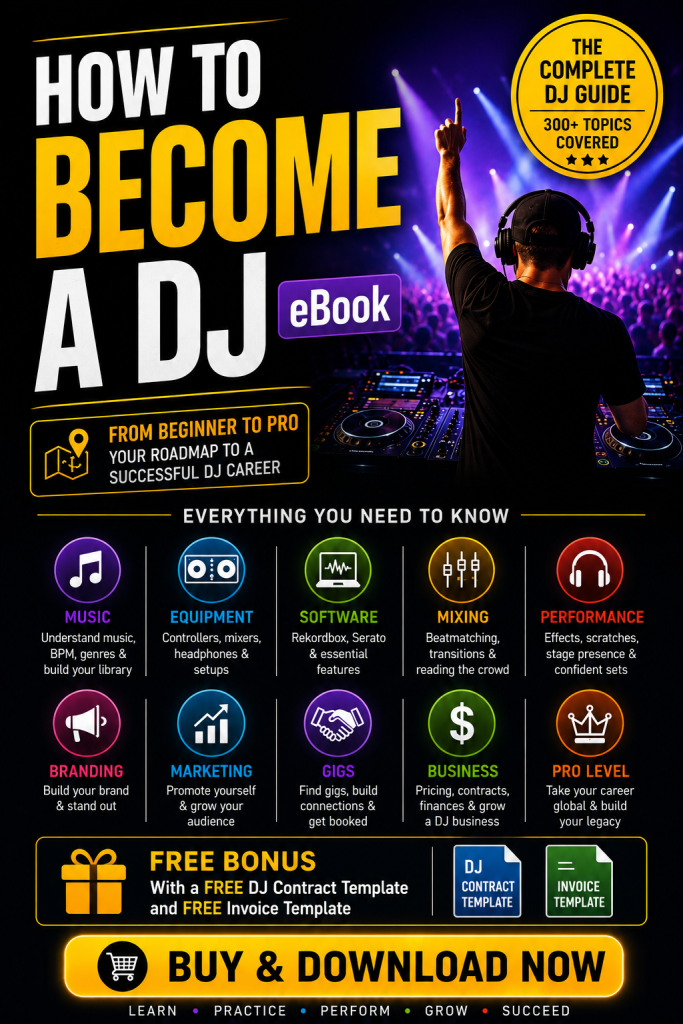
If you have ever dreamed of becoming a successful R and B DJ, performing in clubs, parties, weddings, lounges, radio shows, festivals, or building your own online DJ brand, this powerful eBook gives you the complete roadmap to make it happen.
“How to Become a DJ” is the ultimate beginner to professional guide designed to help aspiring DJs master the art of DJing step by step. Whether you want to mix classic R and B, contemporary R and B, slow jams, hip hop and R and B blends, neo soul, Afro R and B, or commercial club sets, this eBook provides everything you need to start, improve, and grow your DJ career with confidence.
This is more than just another DJ guide. It is a practical and motivational blueprint created for people who are serious about building a successful DJ brand and standing out in the competitive music industry.
Perfect for beginners, aspiring club DJs, bedroom DJs, wedding DJs, mobile DJs, radio DJs, livestream DJs, and content creators looking to build a profitable music brand.
R and B music continues to dominate playlists, clubs, streaming platforms, social media, luxury events, and nightlife culture around the world. Smooth transitions, emotional song selection, crowd control, and soulful energy make R and B DJs some of the most respected entertainers in the industry.
The demand for skilled R and B DJs is growing across:
• Clubs and bars
• Weddings and private events
• Corporate events
• Luxury lounges
• Online radio stations
• TikTok and Instagram live sessions
• YouTube DJ channels
• Music festivals
• Celebrity and VIP events
• Cruise ships and destination parties
This eBook teaches you how to position yourself professionally and turn your passion for R and B music into a real income stream.
This complete DJ training guide covers every stage of becoming a successful DJ, from total beginner to professional performer.
Learn what DJs actually do, the different styles of DJing, how the industry works, and how to develop the right mindset for long term success.
Discover how to understand rhythm, BPM, phrasing, song structure, timing, musical energy, and track selection for smooth R and B mixes.
Learn about:
• DJ controllers
• CDJs
• Turntables
• Mixers
• Headphones
• Speakers
• Audio interfaces
• Microphones
• Home studio setup
Understand exactly what DJ equipment you need to start DJing on any budget.
Master industry leading DJ software including:
• Serato DJ
• Rekordbox
• Virtual DJ
• Traktor
• Engine DJ
Learn how to organise playlists, prepare tracks, set cue points, analyse music, and create professional sets.
This section teaches you how to:
• Beatmatch
• Blend R and B tracks smoothly
• Create emotional transitions
• Build energy in your sets
• Mix different eras of R and B music
• Combine hip hop and R and B professionally
• Read the crowd effectively
Develop performance confidence with practical DJ techniques including scratching, live edits, crowd interaction, microphone control, transitions, and stage presence.
Learn how to build a memorable DJ brand including:
• DJ names
• Logos
• Social media branding
• Personal image
• Online identity
• Website setup
• Music branding strategy
One of the biggest reasons DJs fail is poor marketing. This eBook shows you how to market yourself professionally using:
• Instagram
• TikTok
• YouTube
• Facebook
• SEO strategies
• DJ mix promotion
• Email marketing
• Flyers and posters
• Networking strategies
Discover how to:
• Get booked for events
• Approach venues professionally
• Price your DJ services
• Build relationships with promoters
• Create professional DJ proposals
• Secure repeat bookings
Learn the business side of becoming a DJ including:
• DJ pricing
• Invoices
• Contracts
• Taxes
• Music licensing
• Financial planning
• DJ business setup
• Scaling your income
Take your career further by learning the basics of music production and remixing to help build your unique sound.
Improve your performance level with advanced techniques, transitions, set programming, mashups, crowd psychology, and professional performance strategies.
Learn how to maintain physical and mental wellbeing while balancing nightlife, travel, business, and creative pressure.
This section teaches you how to turn DJing into a serious career through:
• Branding
• Management
• PR
• Sponsorships
• International opportunities
• Building multiple income streams
• Long term career growth
When you purchase this eBook today, you will also receive:
Protect yourself professionally with a ready to use DJ contract template designed for bookings, events, private parties, weddings, and corporate gigs.
Get paid professionally with a downloadable DJ invoice template that helps you manage clients and payments efficiently.
These bonuses alone can save DJs time, money, and legal stress.
This DJ guide is ideal for:
• Beginner DJs
• R and B DJs
• Hip hop DJs
• Wedding DJs
• Mobile DJs
• Club DJs
• Bedroom DJs
• TikTok DJs
• YouTube DJs
• Event DJs
• Aspiring professional DJs
Whether you are starting from zero or already practicing at home, this guide helps you build real confidence and professional knowledge.
Unlike basic DJ tutorials online, this eBook gives you a complete roadmap from beginner to professional status in one place.
You will learn:
• Technical DJ skills
• Music selection strategies
• Branding and marketing
• Business knowledge
• Performance confidence
• Real world DJ advice
• Long term career strategies
It is designed to help you avoid costly mistakes and fast track your DJ journey.
There has never been a better time to become an R and B DJ. With social media, livestreaming, events, content creation, and global music opportunities continuing to grow, skilled DJs are in high demand.
If you are serious about learning how to DJ professionally, building your confidence, growing your brand, and turning your love for music into a real opportunity, this eBook is the perfect place to begin.
Buy your copy today and take the first step toward becoming the DJ you have always wanted to be.
Click here to buy the How to Become a DJ eBook now