

Afro House is more than music. It is rhythm, culture, energy, emotion, spirituality, percussion, groove, and connection. Across clubs, festivals, beach venues, luxury lounges, radio stations, and global streaming platforms, Afro House DJs are becoming some of the most in demand artists in the world.
If you have ever dreamed of learning how to DJ Afro House music professionally, perform live, build a following, create unforgettable mixes, and turn your passion into income, then this is the complete guide you have been searching for.
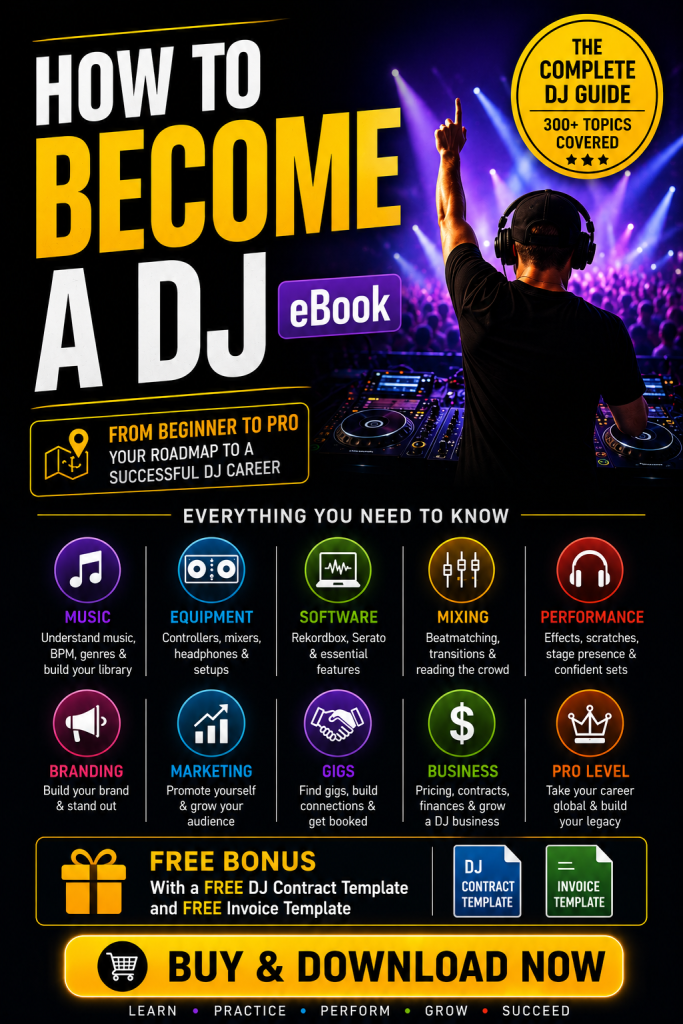
The “How to Become a DJ” eBook is your complete roadmap from beginner to professional DJ, with a strong focus on Afro House DJ culture, mixing skills, branding, performance techniques, marketing, and business success.
Whether you are completely new to DJing or already experimenting with mixes at home, this powerful step by step DJ guide will help you build confidence, improve your skills, grow your audience, and develop your own signature Afro House sound.
Afro House has become one of the fastest growing genres in global dance music. Influenced by African rhythms, soulful melodies, deep percussion, tribal grooves, spiritual vocals, and electronic house music energy, Afro House connects audiences emotionally and physically.
From underground clubs to major festivals, listeners are searching for authentic Afro House DJs who can create immersive musical journeys.
This eBook teaches you how to:
• Understand Afro House structure and rhythm
• Mix Afro House tracks smoothly and professionally
• Build powerful DJ sets with energy and storytelling
• Master transitions, EQ, looping, and effects
• Create your personal DJ identity and brand
• Get your first DJ gigs and paid bookings
• Grow on TikTok, Instagram, YouTube, and SoundCloud
• Learn DJ business, contracts, invoices, and pricing
• Produce your own Afro House music
• Become a respected professional DJ
No confusing jargon. No gatekeeping. Just practical, easy to follow DJ knowledge designed for real beginners who want real results.
This complete DJ training eBook includes 14 detailed chapters designed to help you grow from beginner to professional Afro House DJ.
Learn the foundations of modern DJ culture, what DJs actually do, how the industry works, and what it takes to become successful in today’s competitive music scene.
Discover BPM, rhythm, timing, phrasing, musical structure, key matching, and how Afro House tracks are built for seamless mixing.
Understand DJ controllers, mixers, turntables, headphones, speakers, USB preparation, and the best beginner DJ setups for Afro House DJs.
Master Rekordbox, Serato, Traktor, Virtual DJ, and other professional DJ software platforms used by modern DJs worldwide.
Learn beatmatching, transitions, EQ blending, harmonic mixing, looping, filtering, and how to create professional Afro House DJ sets.
Develop confidence behind the decks and improve your stage presence, crowd interaction, timing, and live performance techniques.
Create your DJ name, logo, visual identity, online image, and unique Afro House style that helps you stand out from other DJs.
Learn how to promote your DJ mixes online using Instagram, TikTok, YouTube, Facebook, Spotify playlists, SoundCloud, SEO, and DJ content marketing.
Understand how to approach venues, clubs, bars, promoters, lounges, weddings, beach clubs, and Afro House events professionally.
Learn DJ pricing, contracts, invoices, taxes, equipment budgeting, negotiations, and how to run your DJ career like a business.
Learn how to start producing Afro House music and remixes to build your profile and increase your bookings.
Take your mixing to the next level with advanced transitions, creative performance techniques, energy control, and crowd psychology.
Learn how to manage late nights, mental wellbeing, confidence, stress, travel, and maintaining a healthy DJ lifestyle.
Discover how to transition into a full time DJ career, attract bigger opportunities, grow internationally, and build long term success.
When you purchase this eBook today, you will also receive two exclusive professional DJ business bonuses completely free.
Protect yourself professionally with a ready to use DJ agreement template designed for bookings, private parties, weddings, events, and corporate gigs.
Send professional invoices to clients and get paid properly with an easy to customise DJ invoice template.
These bonuses alone can save you hours of work and help position you as a serious professional DJ from day one.
This eBook is ideal for:
• Beginner DJs
• Afro House music lovers
• House music DJs
• Mobile DJs
• Club DJs
• Wedding DJs
• Bedroom DJs
• Aspiring festival DJs
• Content creators and music influencers
• DJs wanting to turn passion into profit
Whether you dream of playing beach clubs in Ibiza, rooftop venues in Dubai, lounges in London, festivals in Ghana, or Afro House parties worldwide, this guide gives you the foundation to begin your journey with confidence.
Unlike generic DJ tutorials, this eBook combines practical DJ training with real world branding, marketing, and business knowledge.
You are not just learning how to mix songs.
You are learning how to become a successful Afro House DJ brand.
The guidance inside this book is designed to help you:
• Build confidence quickly
• Avoid beginner mistakes
• Learn faster
• Improve your DJ sound
• Develop a unique identity
• Get booked professionally
• Grow your online presence
• Monetise your skills
• Build a long term DJ career
The world needs fresh Afro House DJs with creativity, passion, rhythm, and authenticity.
Your DJ career starts with one decision.
If you are ready to learn professional DJ skills, build your Afro House identity, and create opportunities in music, this eBook is the perfect place to begin.
Download your copy today and start building the DJ future you have always imagined.
Click here to buy the “How to Become a DJ” eBook on Shopify