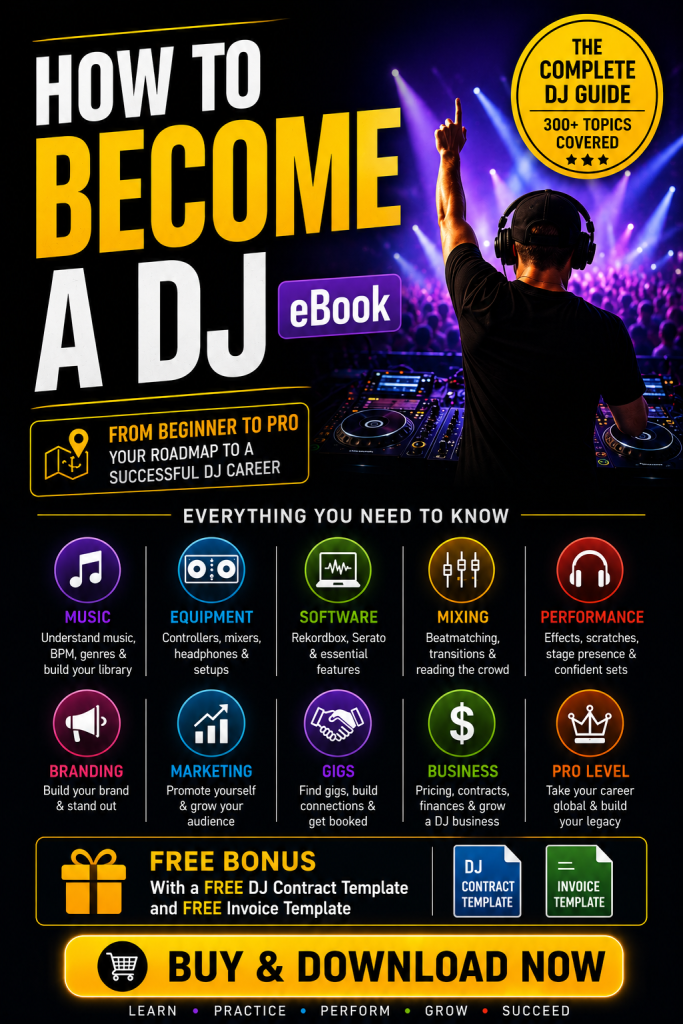


If you have ever dreamed of performing unforgettable deep house sets, building a loyal fanbase, and turning your love of music into a real career, this powerful ebook is your complete roadmap to success.
“How to Become a DJ” is the ultimate beginner to professional guide designed specifically for aspiring DJs who want to master the art of deep house music, DJ mixing, performance skills, branding, marketing, and building a profitable DJ career.
Whether you are completely new to DJing or already experimenting with mixing at home, this ebook gives you the exact foundation, mindset, and strategy needed to grow into a confident and professional deep house DJ.
From understanding beats and transitions to getting booked for clubs, lounges, beach bars, radio shows, festivals, and private events, this guide breaks everything down into easy to follow steps.
You do not need expensive equipment, industry contacts, or years of experience to get started.
You simply need the right guidance.
Deep house music continues to dominate clubs, festivals, lounges, streaming playlists, beach venues, luxury events, and underground scenes worldwide. Its soulful grooves, emotional melodies, smooth basslines, and hypnotic rhythms create the perfect atmosphere for unforgettable DJ performances.
Learning how to become a deep house DJ can open doors to:
• Club DJ opportunities
• Beach club and rooftop events
• Luxury hotel and lounge residencies
• Online streaming and YouTube mixes
• Festival performances
• International DJ bookings
• Brand sponsorship opportunities
• Music production and remixing careers
• Social media growth and influencer opportunities
This ebook is designed to help you tap into this exciting and growing scene.
This professionally structured ebook takes you from complete beginner level all the way to advanced DJ performance and business strategies.
Understand what DJs really do and how the modern DJ industry works. Learn the mindset, habits, and approach needed to become successful in today’s music scene.
Discover how beats, BPM, phrasing, rhythm, timing, and song structure work together. Learn how deep house music flows and how to create smooth and professional sounding mixes.
Learn about:
• DJ controllers
• Pioneer DJ gear
• Turntables
• Mixers
• Headphones
• Speakers
• Audio interfaces
• Home DJ setups
Understand what equipment you actually need without wasting money.
Master the most popular DJ software platforms including:
• Rekordbox
• Serato DJ
• Traktor
• Virtual DJ
Learn how professional DJs prepare playlists, organise music libraries, set cue points, and build live performance sets.
This is where your DJ journey truly begins.
You will learn:
• Beatmatching
• EQ mixing
• Smooth transitions
• Tempo control
• Looping
• Filtering
• Energy management
• Creating seamless deep house journeys
These are the exact skills used by professional club DJs worldwide.
Add creativity and confidence to your live sets with advanced performance techniques and crowd engagement strategies.
Learn how to build your DJ name, style, image, and online presence so you stand out in a competitive music industry.
Discover how to promote yourself using:
• Instagram
• TikTok
• YouTube
• Facebook
• DJ mix platforms
• SEO strategies
• Email marketing
• Music blogs
Learn how DJs grow audiences and get noticed online.
One of the biggest challenges for beginner DJs is landing bookings.
This ebook teaches you how to:
• Approach venues professionally
• Build relationships with promoters
• Create DJ press kits
• Network effectively
• Pitch for club nights
• Secure paid gigs
Learn how to turn DJing into a real business.
Topics include:
• DJ pricing
• Invoices
• Contracts
• Taxes
• Branding
• Business setup
• Professional communication
When you purchase this ebook, you also receive two incredibly valuable bonus resources completely free.
Protect yourself professionally with a ready to use DJ contract template designed for:
• Weddings
• Corporate events
• Private parties
• Club bookings
• Mobile DJ services
Avoid misunderstandings, cancellations, payment issues, and legal problems.
Get paid professionally with a clean and simple DJ invoice template you can customise for your own DJ business.
Perfect for freelance DJs, event DJs, and club performers.
This guide is ideal for:
• Beginner DJs
• Bedroom DJs
• Aspiring deep house DJs
• House music lovers
• Mobile DJs
• Wedding DJs
• Club DJs
• Music creators
• DJs wanting more gigs
• DJs building a personal brand
Even if you have never touched DJ equipment before, this ebook is designed to help you progress quickly and confidently.
Unlike generic online tutorials and random YouTube videos, this ebook gives you a structured, complete, and professional roadmap.
You will save time, avoid beginner mistakes, and learn exactly what matters most in becoming a successful deep house DJ.
Key benefits include:
• Beginner friendly explanations
• Professional DJ industry insights
• Real world DJ business advice
• Step by step learning structure
• Marketing and branding guidance
• Performance confidence building
• Deep house focused strategies
• Practical templates and resources
This ebook is optimised around high value DJ search topics including:
• How to become a deep house DJ
• Beginner DJ guide
• Deep house DJ training
• Learn DJ mixing
• DJ ebook for beginners
• DJ business guide
• How to DJ house music
• DJ marketing tips
• Best DJ ebook
• DJ mixing tutorial
• Professional DJ guide
• Deep house mixing techniques
• DJ equipment guide
• Rekordbox tutorial
• Serato DJ training
• How to get DJ gigs
The music industry has never been more accessible for talented and passionate DJs. With the right skills, branding, and consistency, you can build a powerful DJ identity, grow your audience, and create opportunities around the world.
Your future as a deep house DJ starts now.
Get your copy today and begin your transformation from beginner to professional DJ.
Click here to view and buy the How to Become a DJ ebook